

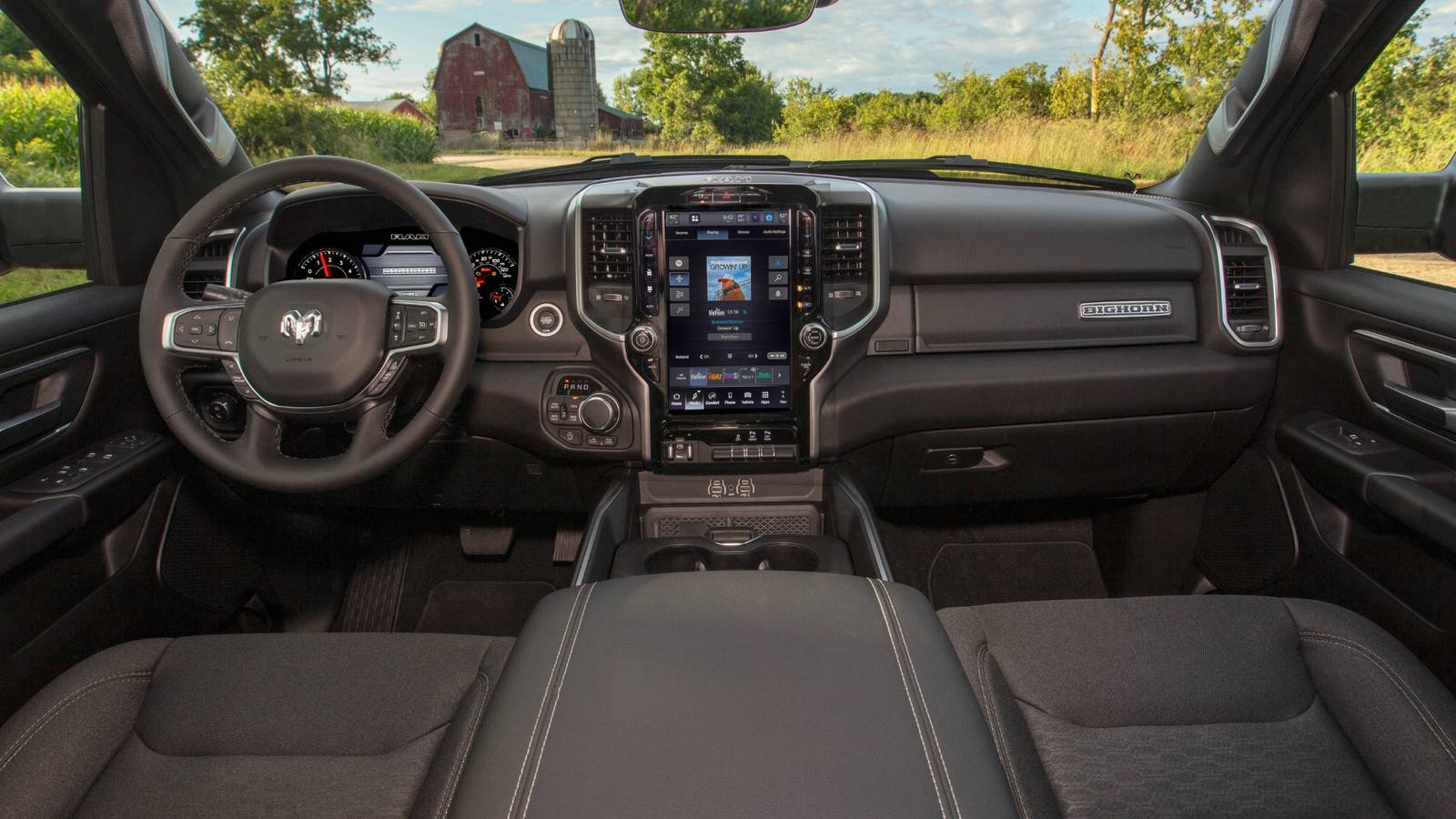
Driving can be many things – from a hobby to a professon – but for the majority, it’s also a necessity; getting to work or school, traveling to family, running errands… driving is essential. And we all had to start somewhere. While there are many driving schools out there, and many of us were privileged to have been taught the basics of how to operate a car by an adult in our lives, some may need a reference guide to look back on. This is a very simple guide for first-time drivers who are learning the interior and controls of their car. We cover everything from the gauge cluster and the pedals to the steering wheel and stalks. We’ll also clarify some of the more advanced features and give you some guidance on warning signs you might need to react to in the future as a driver.
This is meant to serve as a general guide for the interior to most vehicles, and while some specific models will be mentioned, your own car may vary in some way or other.
The Basics: The Controls You Will Need To Operate a Vehicle Safely
To get the car going and driving safely, you will need to know the very basics. In this section we will look at the controls and equipment you will need to use.
The Ignition

To activate the car, its electronics, and engine, you will need to start the car. Most modern vehicles use push-to-start systems, with you simply needing to have the key fob on your person in the car. You then put your foot on the brake for an automatic, or the clutch with the car in neutral in a manual car. Lastly, you press the start button and the car should fire up.
In older cars, you’ll need to put the key into the ignition and twist to turn the car on. To be safe, you should always have the clutch fully depressed in a manual car when you are starting it, even if your car is not in gear. There were a few years when manufacturers were figuring out push-to-start technology, meaning that some late 2000s and early 2010s models may require you to put the key fob in a slot in the dashboard, and then press the start button, or soemething similar.
The Pedals

The pedals from left to right are the clutch, brake, and accelerator. If you have an automatic, you will not have a clutch pedal. The clutch is used to engage the gearbox to the engine, and you will have to master it to be able to drive smoothly with a stick shift. The brake pedal is used to stop the car – regardless of whether you drive an EV, a gas-only car, or any type of transmission – the pedal will be there. The way you use it may vary, however. The accelerator pedal is last and is used to increase the speed of the vehicle. In the image above, you’ll see a foot rest on the far left, too.
The Steering Wheel

Some steering wheels are more complicated than others, offering alot of buttons from which your multimedia and even cruise control is operated. Some steering wheels are more simple, and some are fancy and come with heating for those icy days when you can barely grip the wheel. You also get some interesting shapes, like the oval shape of the 2024 Subaru Solterra or the flat-bottomed wheels of performance-focused cars.
It’s important to know that some steering wheels are much lighter (or easier) to turn, while others are more heavily weighted. Old cars may also not have power steering, which impacts how it feels to turn the wheel, too. You should familiarize yourself with your car’s steering ratio so that you don’t get caught off guard.
Modern steering wheels will usually feature controls for things like audio, cruise control, and, if applicable, buttons to change how the gauge cluster displays. You can adjust your steering wheel position by unlocking the column by pulling a paddle or level; more upmarket cars will have electronic controls to adjust the tilt and position of the wheel.
Your steering wheel also contains your car horn – this is supposed to be used for warning other drivers, drawing attention, and the like. Some people use it to greet people they may know – we hope you never use it in a fit of road rage.
The Stalks

Stalks are where you will find indicators (blinkers), along with some of your lighting controls. This is also where you will control windscreen wiper activation and speed, and window sprayer controls. Some models that are going back to having the gear selector on the column are now putting all controls on one large stalk, too. Some manufacturers also use a second stalk for the cruise control module.
The Gear Shifter Or Gear Selector

Traditionally, cars have an easy-to-recognize gear shifter. Manual cars have a stick shift with some of patterned layout indicating which gear is located where. For automatic cars, the shifter looks a litle different, and has fewer directions of movement: The most basic set-up will be the classic PRND set-up with some transmission levers allowing you to force the car into a low gear, such as PRND12. Hybrids and electric cars can also have a slightly different layout in the form of PRNDB or PRNDL, with the B/L meaning the drivetrain will more actively slow the car down when coasting to harness the energy for the battery.
Some modern cars have changed up on this conventional set up, with buttons for the different shifter modes, a rotary dial, or a column shifter being used. Jaguar had the famously shaped J-gate automatic, Mercedes-Benz used the column shifter for years and Lincoln and Aston Martin have used button-style shifters for a while now. They all have the common ground of a light or icon that shows which gear the car is currently in.
It’s worth noting that if you have an off-road focused car with 4WD, you may have additional shifters for low-range gearing – although all of this is changing too, as technology advances.
The Parking Brake, AKA Handbrake

The parking brake is used to hold the car at a stop and should be engaged any time you are leaving the driver’s seat of the vehicle. There are three main types: Some cars that are based on older platforms use foot-mounted parking brakes. There will be a pedal on the left of your clutch or brake pedal that you press down to engage, then press again to disengage. The second type is the old-fashioned handbrake: a lever you pull up to engage and lock in place, and then push a button in to disengage and lower. The last type is the electronic hand brake. These are activated and deactivated by pressing or pulling on a switch-type button.
Cars with electronic parking brakes are the norm now, and have extra safety features that help stop the car rolling. Some may include auto-hold, a feature that will automatically hold the car when it detects the car has stopped moving. This allows you to take your foot off the brake pedal, with the system disengaging when it detects the accelerator being pressed or enough pressure from the clutch, allowing you to pull away. Another safety system is that the car will automatically turn on the parking brake if a door is opened in the car, and will have to be manually disengaged by pressing the parking brake button.
The Next Level: The Dashboard, Cluster, Mirrors, And Safety.
The Dashboard Gauge Cluster

The most critical visual aid in your car is the driver’s gauge cluster – or instrument cluster – in the dashboard. It contains your tachometer, speedometer, fuel/EV percentage gauge and temperature gauge, as well as an odometer. The tachometer shows you the RPM of the vehicle to help understand when you should change gear or just so you are aware of your engine speed in an automatic. The speedometer shows your speed, and is important to ensure you’re not going over the limit.
You can also expect to see other information like fuel consumption, driving time or distance traveled, and fuel range. In more modern or up-market vehicles, you may have a customizable digital gauge cluster that can show you a map, what is playing on the radio, or settings for your radar cruise control.
In the gauge cluster you will also find a temperature indicator which is vital to knowing if your car is overheating, as well as various dashboard warning lights that may illuminate to show you any current problems with your car. Some cars, such as the Tesla Model 3 and Model Y, don’t have a cluster like this, instead putting that information on the right side of their huge infotainment screen.
The Seat Belts

One of the most important safety aids in your car, the seat belt, is to be used every time you drive your car. Some modern cars require the seat belt to be used to disengage the parking brake. For rear seat occupants, the middle seat belt is generally not compatible with the two outer belts, meaning you will have to be sure you are using the right buckle, or it won’t click in and engage. With seat belt pretensioners now coming to the most modern of cars, don’t be alarmed if a 2024 or 2025 car automatically pulls the seat belts tighter when driving spiritedly or if the car thinks that an accident or impact is imminent.
You may also hear an annoying warning tone or see an illuminated warning light on your gauge cluster if you aren’t buckled up. Safety first!
The Rearview Mirror

The rearview mirror is key to being aware of your surroundings while driving and parking. They were rather straight forward up until the last few years, but nowadays these can look remarkably different. The most basic type will be a regular rearview mirror you can manually adjust; you should position this for the clearest view through the rear window. There will be a small tab underneath the glass that you can pull or push. This is the mirror dimmer, and is used if you are driving in the dark and want to lessen the glare from the headlights of other vehicles behind you. Most modern cars now have an automatic dimmer that will detect the glare and adjust as such.
These days, you also get a mirror camera, which is becomign more and more popular. This type of mirror not only show you a view out of the back, but can also show a backup camera view for when you are needing to reverse. In fact, some cars these days don’t have traditional mirrors at all, using just a camera – and that’s because some cars don’t even have a rear windscreen. Have a look at the Polestar 4 and 5 if you want an example.
Basic Safety Controls

There are some other basic safety systems and controls we need to look at inside your car. Your hazard lights, used to highlight your vehicle if parked in a dangerous place, or signal that the car is in trouble in some way (such as being broken down or crashed), are usually located in the center console. It’s marked clearly in red with a triangle design in white; it may also be illuminated for ease of use.
Another safety control you may need to use, especially when towing, is your headlight leveling dial. Some cars will do this automatically, but if yours doesn’t, you will see a small dial to the left of the steering wheel. You move this dial to the desired position to point the headlights to where you want, making sure not to blind oncoming drivers by raising them too high.
Convenience Features And Infotainment

So you are all ready to drive. In this next section, we will look at the things that make your journey more pleasant and the infotainment system and its controls.
We do not recommend using these controls while driving, unless you are an experienced driver and familiar with your car. Distracted driving is extremely dangerous.
The HVAC Controls

Also known as the heater, temperature, or A/C controls, the HVAC controls are not only used to control the temperature of the cabin, but also de-ice or de-fog your windows. Some cars use buttons, some cars incorporate the HVAC controls into the screen, but all follow a basic formula. The three main controls will be temperature, placement and speed. Temperature is first and will either be a blue-to-red dial on more basic cars, showing a general idea of the temperature you are setting it too, or a digital setting with numbers. In more advanced models with single or dual zone climate control, you will have one or two actual temperature gauges to help you get the exact temperature you or your passenger want.
Most cars with this more advanced gauge will have an “Auto” button, where you set the temperature you want, press Auto and the car will automatically keep the cabin at the desired degrees. It is important to point out that older or less expensive cars may not feature air conditioning, meaning they will blow no colder than the outside temperature. The car will usually activate the A/C automatically if trying to get to a cold enough temperature, but A/C can also be activated with a button push.
Next is the placement or direction of airflow, with a choice between upward (toward your head), feet, and the windscreen. Most cars will let you choose multiple or all at one time. The windscreen option is key as it allows you to de-mist or de-ice your windscreen and front door windows. Setting it to the window option may also activate the wing mirror de-misters.
Lastly, there is the speed gauge. Here, you can control how much air you want traveling through the vents. Other HVAC controls you will see include the recirculation button/slider. This is used to keep cabin air circulating through the vents, instead of outside air and is useful for heating up or cooling down the cabin quickly (or preventing smoke or smells from outside coming in). Lastly, you may have a rear window de-fogger button. This button turns on a heating element inside the rear window, clearing it from mist.
The Center Console

What is the middle compartment in a car called these days? The center console is something you will use every time you drive as it contains the shifter (or gear selector), parking brake, and sometimes cupholders and an armrest. Modern cupholders now have more functionality than ever, with some cars imbuing them with heating or cooling. Depending on the vehicle and its infotainment setup, the center console may also contain a trackpad or wheel/dial to scroll and select things on your infotainment screen.
Infotainment System Or Multimedia Screen

More commonly referred to as the infotainment display or multimedia screen, your car’s infotainment system is where you will control your vehicle’s audio and navigation systems, and depending on your vehicle, some or all of your climate controls. Some infotainment systems are now becoming almost the entire dashboards, with brands like Lincoln, Cadillac and Mercedes-Benz selling cars with full-width screens that go from one side of the car to the other.

Most infotainment systems have a user interface that is made by the manufacturer. Depending on the vehicle and options, the infotainment system will be your main touchpoint in the car, other than the steering wheel. Most will have a home screen, displaying basic information along with a small view of a map for navigation. These are usually customizable to better suit your preferences. On some more premium cars, the climate control will also be displayed here at the bottom of the screen, or by pressing a shortcut button on the screen, or center stack.
Similarly, your audio and phone controls will also be built into your infotainment system. You can connect your phone via Bluetooth or use a USB-C/USB-A cable to stream audio and phone calls through the vehicle’s speakers. Most modern cars, depending on options, will also have access to features like Android Auto and Apple CarPlay. These act as a more generic, user-friendly system to stream your phone screen and certain apps, such as Waze and Spotify to your car in a consistent and uniform way. It must be noted that some makes and models may not have access to these features, or require the phone to be connected via a wire to access Android Auto or Apple CarPlay.
Some systems will have built-in navigation, and can be set to take you to whatever destination you require. For older luxury cars, SD cards or discs may be required for other regions or for other parts of the US, due to the limitations of older infotainment systems. Your audio/speaker customization may also be found in your information, with users able to control the bass, treble and mids, along with the placement of the sound in the car. We recommend that you get used to your car’s infotainment system before driving, not only for your convenience but also for safety, as some confusing or poorly made systems have been criticized for how much they take drivers’ eyes off the road. In fact, some modern systems may sense that you’re furiously tapping around and not looking at where you’re going, locking you out of the screen for a few seconds.
Lastly, your ADAS and driver assist technology will be embedded in your center screen, allowing you to turn off or on the systems you want. One thing of note, due to regulations, you may need to turn systems like speed limit warning noises off every time you start the car, with it being set to on by default until turned off every time the car is started.
Storage And Other Features
Lastly, we will look at storage and other small features inside your car that help to make your driving experience a bit more livable.
Door Cards

The door card/door panal also has some form of storage and not just the door latch/armrest. In most mainstream cars, there is a bin at the bottom of the door for storage, along with a bottle holder. Further up your door card you will find your electric window controls and door handle – unless you’re driving a classic car that requires you to manually open windows. The driver’s door will have access to more features than the passengers, like window lockouts, electric mirror controls and a door unlock button.
The Armrest

While not every car has one, the armrest and armrest storage area is getting ever more multipurpose. Almost all are adjustable, sliding back and forth, but some may also have the ability to adjust height. The modern arm rest is alot more complicated than that, with split levels, USB points to connect and charge your phone and even heating and cooling, both on the armrest surface and in the storage area.
Some brands, like Genesis, even offer a feature that clears bacteria off of any object placed inside using UV technology. On more utilitarian vehicles like pick-ups and vans, the center armrest can also have a measurement table like in Ram models built into the armrest, or in the case of the newest Ford F150, fold out to become an actual table for writing and typing on.
The Trunk Release And Hood Opener

Some cars may have a trunk release button by the door or on the left of the steering wheel. These will either pop the trunk release, allowing for the people outside to open it, or electronically open it and/or close it with the button. Some sedans, like the base Audi A6, have a sort of halfway house, using the pressure from the trunk struts to pop open the trunk, but needing to be manually closed.
Similarly, you’ll often find the latch to pop your hood near underneath the steering wheel or in the footwell somewhere within reach.
Other Features Inside Your Car You Might Need To Know About:
- Seats: Depending on the make and model you’re driving – and the age – your seat may have electronic controls along the side to adjust the backrest, boslters, height, and distance from the pedals. In older cars, this is done with manual levers. Always familiarize yourself with how these work.
- Sun visors: With the exception of a few cars, all cars have sun visors that can flip down to help shade your eyes from glare. They’re actually a safety feature, and can swivel to eliminate harsh light from the side, too. They may also contain mirrors – the driver should never use these while driving.
- Glovebox: Likely your main point of storage, the glovebox comes in various shapes and sizes – and in some trucks and SUVs, you may even have two! Some can lock to keep your valuable safely stowed, but these are a great place to keep some emergency supplies like phone chargers and a small first aid kit.
FAQs:
What are the parts called inside a car?
There are a huge number of different parts of the inside of the car which we call the cabin. The steering wheel, pedals, dashboard, infotainment and center console all make up the cockpit, too, which is the space the driver pilots the car from.
Which SUV has the nicest interior?
The SUV’s with the nicest interiors come from luxury brands, such as Rolls-Royce, Range Rover or Bentley. However, brands like Genesis, Lincoln, Mercedes, and BMW also offer some truly refined cabins.
What car brand has the nicest interior?
That depends on what you define as “nice”. Brands like Audi and Genesis offer understated and elegant interiors, while Mercedes-Benz goes all in on technology. Rolls-Royce and Bentley are completely ultra-luxurious.