


Close Menu
  • News
  • Featured
  • Electric Cars
  • Luxury Cars
  • Reviews
  • Advice

Subscribe to Updates

Get the latest creative news from Motor Fortune about Electric Cars, Luxury Cars, design and More.

What's Hot

Audi’s Stunning New Nuvolari Supercar Is A Tri-Motor Plug-In Hybrid

June 5, 2026

Audi Surprises With 1,000-HP V8 Nuvolari Supercar, and It Really Looks Like This

June 5, 2026

$8000 slashed from Hyundai EVs

June 5, 2026
Facebook X (Twitter) Instagram
  • Contact
  • Privacy Policy
  • Terms & Conditions
Facebook X (Twitter) Instagram Pinterest Vimeo
Engine CreationsEngine Creations
  • News
  • Featured
  • Electric Cars
  • Luxury Cars
  • Reviews
  • Advice
Subscribe
Engine CreationsEngine Creations
Home»Advice»Does AC in a Car Use Gas?
Advice

Does AC in a Car Use Gas?

March 31, 2026No Comments3 Mins Read
Share Facebook Twitter Pinterest LinkedIn Tumblr Reddit Telegram Email
Share
Facebook Twitter LinkedIn Pinterest Email

Rising temperatures and higher gas prices sometimes prompt drivers seeking to maximize mileage and minimize fuel costs to ask: Does the AC use gas in my car?

Yes, your vehicle’s air conditioner consumes fuel, although it’s an indirect use. Keep reading to learn more about how — and how much — gas the AC in your car uses.

How Does the Car Air Conditioner Work?
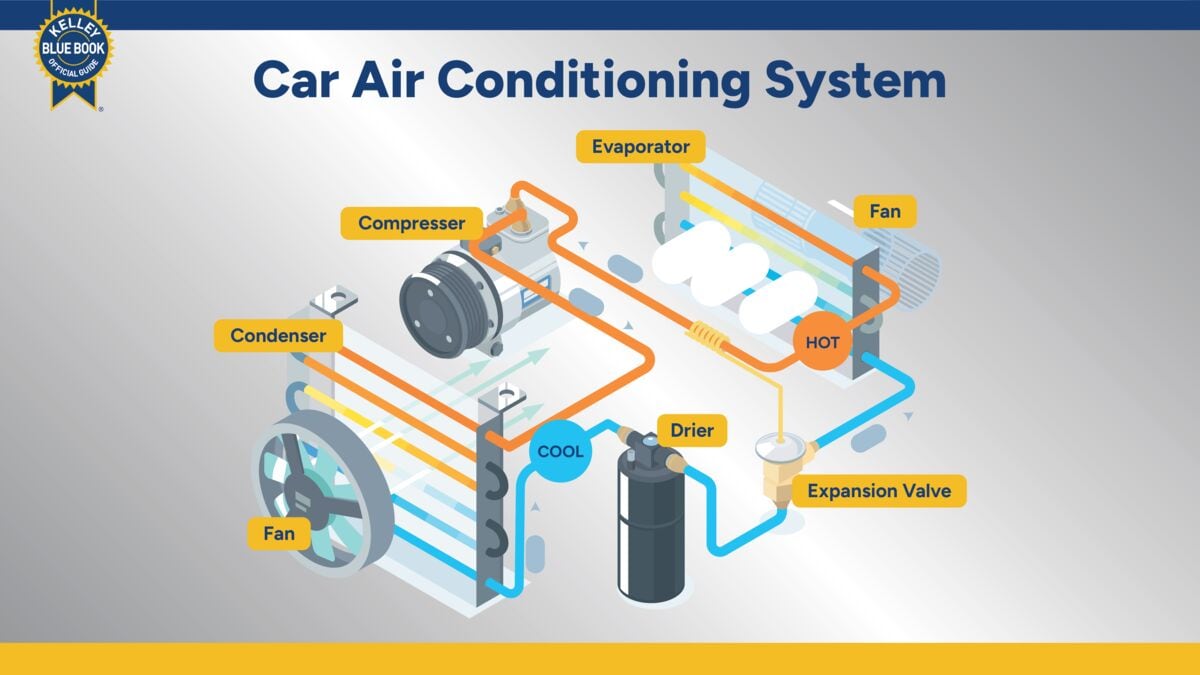
Car air conditioning systemCar air conditioning system

A general overview of how a typical car air conditioner works can help you understand its negligible impact on fuel consumption. The car’s AC uses energy from the engine to cool the cabin temperature. Here’s how it works:

  1. Compressor: The heart of the air conditioning system is the compressor. It compresses the refrigerant gas, raising its temperature. The compressor is the component that indirectly uses power generated from the vehicle’s fuel.
  2. Condenser: The hot refrigerant gas flows through the condenser (a series of coils), releasing heat. The cooled gas condenses into a cold liquid.
  3. Receiver-drier: Refrigerant passes through a reservoir that removes water from the line, which, if not removed, can create ice crystals and damage the AC system.
  4. Expansion valve: A valve restricts the refrigerant flow, causing it to expand and change from high-pressure to low-pressure refrigerant.
  5. Evaporator: The liquid refrigerant passes through the evaporator, absorbing heat from the cabin air and cooling it down.
  6. Blower fan: The blower fan circulates the cold air outside the evaporator into the cabin.

RELATED: Car AC Not Blowing Cold Air: Possible Causes and Solutions

Does Car AC Use Gas?

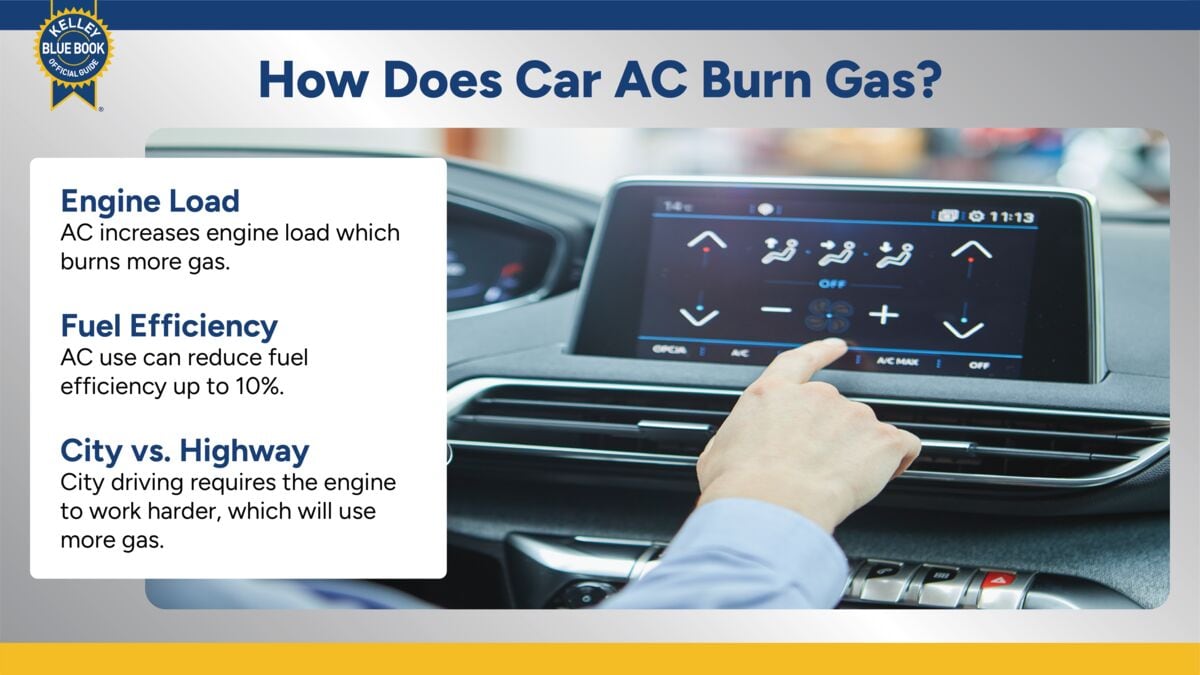
Yes, the car air conditioner does use gas, but not directly, and not that much. The vehicle’s engine uses gas to power the alternator; the alternator provides energy for the compressor in the AC system. The impact on fuel economy varies depending on factors like outside temperature, driving speed, and the car’s make and model.
See also  The Inside Of A Car Explained For Beginner Drivers
Does AC in a Car Use Gas?Does AC in a Car Use Gas?

Tips for Balancing Comfort and Fuel Efficiency Using AC

  • Use AC wisely: Turn it off when it’s unnecessary. If the weather is pleasant, consider opening the windows instead.
  • Pre-cool the car: Park in the shade or use a sunshade to keep the interior cooler. When you start the vehicle, roll down the windows and let the hot air escape before turning on the air conditioner.
  • Service regularly: A well-maintained air-conditioning system is more efficient. Check the refrigerant levels, clean the filters, and ensure the system is leak-free.

Yes, the car air conditioner indirectly uses gas by putting an additional load on the engine. Staying cool is essential, but so is saving on fuel costs. Your and your passengers’ comfort, and the safety issue of driver fatigue from excessive heat, are considerations when deciding to use the AC. With smart usage and regular maintenance, you can balance comfort and fuel efficiency.

Source link

Car gas
Share. Facebook Twitter Pinterest LinkedIn Tumblr Email
Previous ArticleJaguar’s Electric Sedan Prototype Seems Pretty Great. Will Anyone Care?
Next Article A Drive Review of the 2026 Hyundai Palisade Calligraphy and Off-Road in an XRT Pro

Related Posts

Advice

DIY Automotive Air Conditioning Repair and Diagnostics Guide

June 4, 2026
Featured

Could Nissan Give Us the Cheapest New Car in America Again?

June 4, 2026
Advice

Mercedes Service A vs. B Cost And Key Differences Explained

June 4, 2026
Add A Comment
Leave A Reply Cancel Reply

Top Posts

Audi’s Stunning New Nuvolari Supercar Is A Tri-Motor Plug-In Hybrid

June 5, 2026

Honda Civic Type R vs Audi RS 3: the ultimate hot hatch face-off

December 2, 2025

Lamborghini Diablo Buyers Guide – Exotic Car List

December 2, 2025
Stay In Touch
  • Facebook
  • YouTube
  • TikTok
  • WhatsApp
  • Twitter
  • Instagram
Latest Reviews
Reviews

Used Volkswagen Passat (Mk8, 2014-2021) review

June 4, 2026
Reviews

Why the 7.3L Is the One To Buy

June 2, 2026
Reviews

2026 Honda Passport Trailsport Review — New And Bigger

June 2, 2026

Subscribe to Updates

Get the latest creative news from Motor Fortune about Electric Cars, Luxury Cars, design and More.

Most Popular

Why the 7.3L Is the One To Buy

June 2, 2026

Tesla dominates fleet choice for EVs, but lack of electric utes a problem

May 19, 2026

Bugatti Chiron with 109k miles; Highest-mileage Bugatti hypercar?

January 26, 2026
From Our Sponsors

Subscribe to Updates

Get the latest creative news from Motor Fortune about Electric Cars, Luxury Cars, design and More.

Facebook X (Twitter) Instagram Pinterest
  • Contact
  • Privacy Policy
  • Terms & Conditions
© 2026 Engine Week - All rights reserved.

Type above and press Enter to search. Press Esc to cancel.