

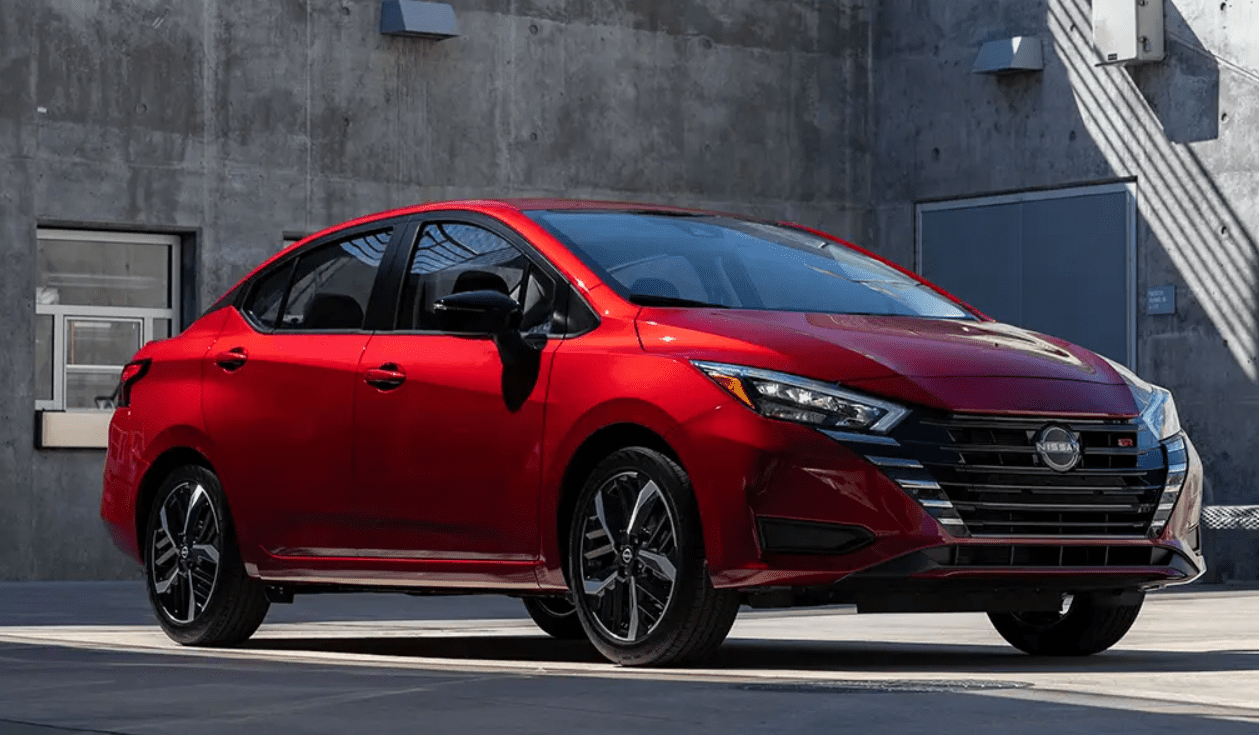
But then the Versa S manual was quietly dropped in May 2025, and by the end of the year, Nissan had stopped selling the Versa for the U.S. market altogether. Assembled in Mexico and suddenly subject to a 25 percent tariff, it was no longer a financially feasible proposition for Nissan to keep selling it in America. The Versa is still sold in Mexico and other markets.
ADVERTISEMENT – CONTINUE READING BELOW
Does Nissan still see a market for ultra-affordable vehicles like the Versa in North America? “I think so, but there is context,” Nissan Motor Corporation president and CEO Ivan Espinosa told us. Demand and tariffs can be competing forces. “The question is how to get to the right price,” Espinosa said. “If the tariffs are adjusted, we have cars that can be very competitive like Kicks and Sentra, ready to go.” The Kicks subcompact SUV and Sentra sedan are also produced in Mexico and remain two of the cheapest new cars you can buy in America.
Nissan already had to cut some lower trims of the Kicks and Sentra that the CEO said were at the edge of profitability. “But the cars are there and ready. If the context changes we would bring both,” Espinosa added. “We would add more. We have the capability and competitiveness with our Mexico operation.”
ADVERTISEMENT – CONTINUE READING BELOW
The company has studied moving Sentra and Kicks production to the U.S., but it wouldn’t be easy to do so, according to Nissan Americas Chairman and CEO Christian Meunier. “But a 25 percent tariff on entry level vehicles is not sustainable,” he added.
Nissan Kicks made in Mexico, subject to tariffs.
Tariffs on Mexican-made Models
Nissan Americas chief product & planning officer Ponz Pandikuthira is optimistic the tariff situation with Mexico will be worked out and there will continue to be a future for the Sentra and Kicks that are made there. It’s taking longer than he thought, but it is a strategic necessity to get the border issue worked out.
ADVERTISEMENT – CONTINUE READING BELOW
In the interim, the automaker is optimizing trims, dropping base levels, and looking at how it can increase the content of cars built in Mexico with American parts. Meunier said the company is also working to identify what is made by U.S. suppliers to claw back some of the tariff costs, including emphasizing the fact that a lot of the research, development, and crash testing of vehicles is done in Michigan, in the hopes that Nissan can get credit for that.
Nissan has also been applying pressure on the Mexican government to help bridge the financial gap until the tariffs come down, hopefully with the renegotiation of the USMCA trade agreement between the U.S., Mexico, and Canada, which is up for review in July. “Twenty-five percent is hard to swallow, especially on product with little margin,” Meunier said. He thinks the tariffs will come down, given that other countries only pay 15 percent. “That is not fair or smart when Mexico is a neighbor.”
ADVERTISEMENT – CONTINUE READING BELOW