

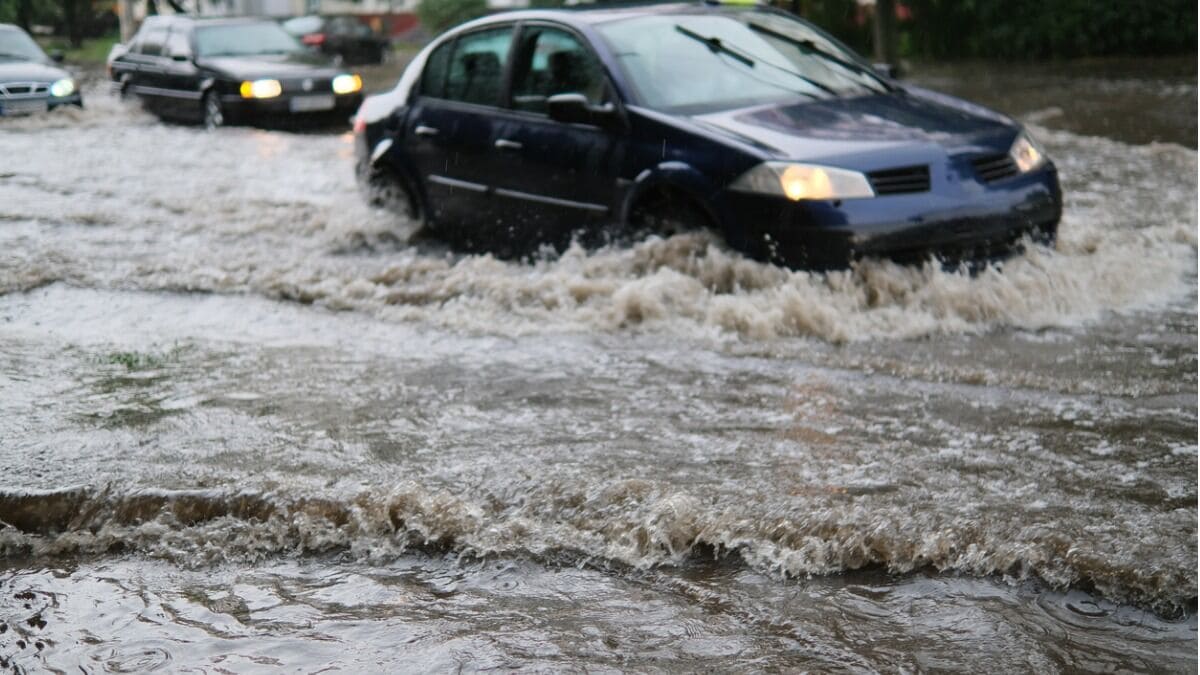
Usually, no. You should not start or drive a flood-damaged car until it has been inspected. Floodwater can damage the engine, brakes, electronics, airbags, seatbelts, and other safety systems, even if the car looks normal once it dries.
If the vehicle is an EV, hybrid, or plug-in hybrid, do not charge it or park it indoors until a professional checks it. Floodwater, especially brackish or saltwater, can damage high-voltage battery systems and create a fire risk.
Can I Drive a Flooded Car?
A flooded car is not safe to drive until you know how much damage it has. Even shallow water can contaminate fluids, corrode brakes, damage wiring, and cause electrical problems that appear later.
Do not drive the car if:
- The water reached the floorboards, seats, dashboard, engine bay, or battery pack.
- The engine stalled in water.
- Warning lights are on.
- The brakes feel soft, noisy, or weak.
- The car smells musty or has standing water inside.
- The vehicle is an EV, hybrid, or plug-in hybrid that was exposed to floodwater.
Flood exposure can cause hidden damage, so a certified mechanic or repair shop should usually inspect the vehicle before any restart attempt.
Check the engine oil first
Pull the dipstick and inspect the oil. A milky or cloudy appearance can indicate water contamination inside the engine.
Remove the spark plugs
Take the plugs out before trying to spin the engine. This gives trapped water a path out of the cylinders.
Replace oil and the oil filter
Drain the old oil and install a fresh filter so you are not circulating contaminated lubricant through the engine.
Drain the fuel tank if needed
If water may have entered the tank, empty it before moving any farther. Do not risk sending water into the fuel system.
Crank the engine with the plugs out
Turn the engine over briefly with the spark plugs removed so any water inside the cylinders can be forced out.
Confirm the tank is clear before cranking
Make sure the fuel supply is free of water first. Otherwise, the engine can pull contaminated fuel deeper into the system.
Lubricate the cylinders if water comes out
If the cranking step expels water, spray a light aerosolized oil into the cylinders before repeating the process.
Reinstall the spark plugs and try to start
Once the cylinders appear clear, put the plugs back in and attempt to start the engine.
Let it idle briefly, then shut it down
If the engine starts, allow it to run for a few minutes. Then turn it off and prepare for another inspection.
Inspect the oil again
Check the dipstick a second time. If the oil still looks cloudy, replace both the oil and filter again.
Important Note
Floodwater can damage electronics long after the engine clears
If fuse boxes, control units, or electronic modules were submerged or soaked, they may still require replacement even after the mechanical restart steps are complete.
Why Flooded Cars Can Be Dangerous
Flood damage is often hidden. A car may start and drive after the water recedes, but that does not mean it is safe.
- Floodwater can:
- Damage the brakes.
- Contaminate engine, transmission, brake, or differential fluids.
- Corrode wiring and electrical connectors.
- Affect airbags, seatbelts, and other safety systems.
- Cause mold inside carpets, seats, and HVAC vents.
- Leave behind salt, sewage, mud, or chemicals.
- Trigger electrical problems days or weeks later.
Salt water is especially harmful because it accelerates corrosion. A vehicle that seems fine immediately after a saltwater flood may develop serious braking, electrical, or sensor problems later.
Never Drive Through Floodwater
If the road is flooded, turn around. Do not try to cross it.
Floodwater can hide washed-out pavement, deep holes, debris, open manholes, and stalled vehicles. It can also enter the engine air intake and stall the car. Four-wheel drive, large tires, and high ground clearance do not make a vehicle safe in moving water.
Repair is possible in some cases, but long-term reliability and economics determine whether it is truly worth doing.
When Repair May Be Possible
A repair path may exist, but it should pass both safety and value checks:
- Water exposure stayed mostly at carpet level and below key systems.
- No evidence of engine water ingestion or internal mechanical damage.
- No damage found to the high-voltage battery or related hardware.
- No major electronics or restraint/safety-system failures detected.
- Professional drying, cleaning, fluid service, and diagnostics are completed.
- Repair can still be a poor value, and latent corrosion or electrical faults may appear months later.
!
A vehicle is more likely to be totaled if:
- Water reached the dashboard.
- The engine ingested water.
- Major electronics were submerged.
- The airbags, seatbelts, or restraint systems were affected.
- The car sat in salt water.
- Repair costs approach or exceed the vehicle’s value.
Flooded EV, Hybrid, and Plug-In Hybrid Safety
EVs, hybrids, and plug-in hybrids need extra caution after flooding.
Do not charge, drive, or store a flood-exposed EV indoors until it has been inspected. If the vehicle can be moved safely, park it outside and away from buildings, other vehicles, and combustible materials. Some automakers and emergency officials advise keeping submerged EVs at least 50 feet from structures or combustibles until they are inspected, especially after saltwater exposure.
Follow the owner’s manual, manufacturer instructions, and local emergency guidance.
What Insurance Covers Flood Damage?
Comprehensive coverage is a part of an auto insurance policy that typically covers flood damage. It also covers many other events outside your control, such as theft, vandalism, falling objects, and severe weather.
Collision and liability coverage generally do not pay for flood damage to your own vehicle.
You usually need comprehensive coverage before the storm is in the forecast. Insurers may place binding restrictions on new coverage when a major storm is approaching.
Editor’s Note: We have updated this article since its initial publication. Chris Teague contributed to the report.