


The Diablo is the last truly “old-school” Lamborghini: no hybrid systems, no The Diablo is the last truly “old-school” Lambo: no hybrid systems, no nanny electronics, just a naturally aspirated V12, a dogleg manual, and a whole lot of drama.
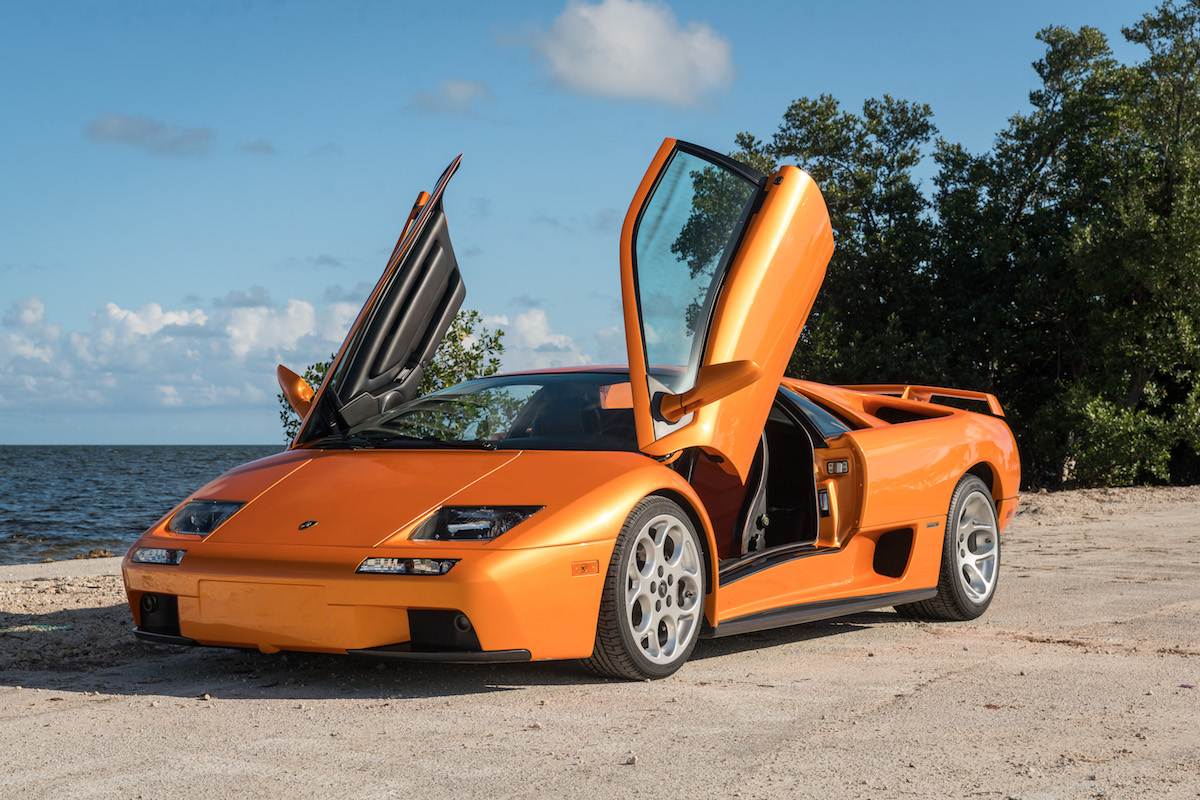
This guide will walk you through the different models, what it’s like to own one, key problem areas to inspect, and how the market looks today so you can buy with your eyes open–not just your heart.
Brief History: The Last Analog V12 Bruiser
Production:
-
1990-2001Engine:
-
5.7-6.0-liter naturally aspirated V12Layout:
-
Mid-engine, rear-wheel drive (later models added AWD)Power:
-
Roughly 485-575+ hp depending on modelThe Diablo replaced the Countach and carried Lamborghini through the 1990s, evolving from a raw, slightly crude supercar into a more refined, faster and better-built machine after Audi took control in the late ’90s.
Early cars are the most “period correct” — wild, loud, less polished. Late 6.0 VT cars are the most usable and best built, but also the most expensive.
Model Overview: Variants and What Makes Them Special
Diablo (Early Cars – 1990-1993)
~485 hp 5.7L V12
-
Rear-wheel drive, manual only
-
Pop-up headlights on early models, pure 90s wedge styling
-
No ABS, minimal driver aids
-
Who it suits:
Purists who want the rawest Diablo experience and don’t mind slightly more ‘kit-car’ build quality and heavier controls.Buyer notes:
Early cars can feel more fragile and less refined. A great example with sorted mechanicals and good history is far better than a cheap project.Diablo VT (1993-late 90s)
Adds
-
viscous AWD (hence VT) for better tractionMore civilized road manners and improved cooling
-
Power stays around 485-530 hp depending on year and market
-
Who it suits:
Someone who wants the Diablo look and sound but with a bit more confidence at speed and in less-than-perfect conditions.Buyer notes:
Extra complexity with AWD means more parts to maintain, but many owners find the added stability worth it.Diablo SE30 & SE30 Jota (1993-1995)
Built to celebrate Lamborghini’s 30th anniversary
-
Lighter weight, more track-focused, often purple (Viola SE30 is iconic)
-
Power bumped (around 525 hp, more with Jota kit)
-
Some cars have more aggressive aero, minimal interior comfort
-
Who it suits:
Collectors and hardcore enthusiasts who want rarity and motorsport flavor.Buyer notes:
Extremely rare and highly collectible. Prices are often higher than the standard Diablos. Don’t expect “daily usable”; think event or track toy.Diablo SV (Mid-late 90s)
Rear-wheel drive again, slightly lighter, more power (~510+ hp)
-
Often features big SV graphics along the sides
-
One of the most iconic ‘poster car’ specs
-
Who it suits:
Enthusiasts who want the drama of RWD and the look of a full-on 90s supercar, plus a little more performance.Buyer notes:
The SV badge helps desirability. Watch for cars driven hard without proper maintenance–it’s a favorite for spirited driving.Diablo VT Roadster
Who it suits:
Those who want the V12 scream with the sky above.Buyer notes:
Check for roof seal issues, wind noise, and signs of water ingress. Roof panels must fit snugly; poorly adjusted panels can lead to leaks and rattles.Diablo GT
Hardcore, track-focused limited edition
-
Wider body, more aggressive aero, lighter weight
-
Power around 575+ hp, more extreme suspension
-
Who it suits:
Serious collectors. You know what to expect if you are shopping for a GT.Buyer Note Buy the best, original, well-documented example you can possibly afford.
Diablo 6.0 / 6.0 VT (2000-2001)Last and most refined Diablos, built under Audi ownership
Enlarged 6.0L V12, around 550+ hp
-
Much improved build quality, interior, and overall polish
-
Sharper, cleaner styling with fixed headlights
-
Who it suits:
-
Buyers who want Diablo presence and sound with the least compromise in usability and reliability.
Buyer notes: Often considered the “one to have” if you want to actually drive the car regularly. Driving Experience: What it’s Like
Size, visibility, and the Diablo’ Rearward visibility is poor, and doors that swing up are dramatic but not exactly subtle.Performance:
Even by modern standards, a healthy Diablo is very fast. Acceleration is brutal, especially in SV/GT/6.0 variants.
-
Ergonomics: Seats can be surprisingly comfortable on longer trips, but pedal offset and cabin heat can be annoying. Taller drivers might feel splayed around the wheel.
-
Sound: One of the best V12 soundtracks ever made. Many cars are equipped with aftermarket exhaust systems. If you want theatre and mechanical connection, you’ll be in heaven.
-
Maintenance and Running CostsOwning a Diablo is not a budget exercise. Even well-sorted cars need consistent attention. Consider
-
preventive care instead of reactive repairs. Typical cost considerations:
Annual servicing:
Expect higher-end exotic pricing–fluids, belts, inspections, and small consumables add up quickly.
Clutch: Clutch life depends on use. They can be worn out quickly by aggressive city driving and stop-and go. Tires and brakes: A big, heavy car with performance rubber. Many owners find that tires age before they wear. Always check date codes.
-
Cooling system: Radiators, hoses, and fans need to be in top shape. Overheating a V12 is a quick way to ruin your investment.
-
Electrical gremlins: Especially on earlier cars, wiring and connectors can corrode or loosen. Window regulators and pop-up headlights (where equipped) need checking.
-
A Diablo with excellent service history and recent major work
-
is almost always a better buy than a cheaper car with gaps in the paperwork.Common Issues and What to Inspect
-
When shopping, bring a specialist if at all possible and insist on a pre-purchase inspection (PPI)
by a shop that truly knows Diablos. Key areas:Engine and DrivetrainService history:
Look for documented major services, including timing components, fluids, and valve adjustments where applicable.
Oil leaks: Some seepage is common for an older Italian V12, but heavy leaks from the rear main, cam covers, or oil cooler lines can be costly.Cooling system:
Check for evidence of overheating–discolored expansion tank, warped or cracked plastic, or coolant smells. Fans should kick on as they should.
-
Clutch and gearbox:Clutch take-up should be smooth, without judder or excessive slip.
-
Gearbox should engage gears cleanly; any crunching on 2nd or 3rd could mean synchro wear.Listen for whining or clunking noises under load.
-
Suspension and BrakesBushings and ball joints:
-
Age and weight can wear them out, causing looseness, clunks, or vague steering.
-
Adjustable suspension (if fitted):
-
Some cars have factory adjustable dampers that are expensive to replace. Make sure modes actually work.
-
Brakes:
-
Check for warped rotors and uneven pad wear. Parts can be costly, so a full brake overhaul is not trivial.
-
Body and FrameAccident repairs:
-
With low cars and inexperienced drivers, curbed front ends and undertray damage are common. Check for overspray, panel misalignment, and poor fiberglass repairs.Corrosion:
-
While body panels are often composite or aluminum, check steel subframes and suspension mounting points for rust, especially in damp climates.Doors and windows:
Scissor doors should align and latch properly; sagging can be a sign of hinge wear or past damage. Windows should go up and down without binding.
-
Interior and ElectronicsSticky switches and trim:
-
Age and heat can degrade plastics. Not catastrophic, but can be expensive to put right if you care about originality.Instrument cluster and gauges:
-
Everything should work. Non-functioning gauges can mean anything from a bad sender to more serious electrical faults.Air conditioning:
Important on a Diablo–the cabin runs hot. Make sure it blows cold and cycles correctly.
-
Documentation and ProvenanceA Diablo with strong documentation will always be easier to sell and more confident to own. Ideally you want:
-
Original service book
-
with stamps and/or detailed invoicesRecords of
major services
(clutch, cooling system work, suspension refreshes, etc. )
-
Any documentation for upgrades (exhaust, stereo, cooling mods)
-
History of ownership and mileage consistency
-
Imported cars or those with unclear titles should be approached carefully. )Mileage discrepanciesNon-original V )
-
Mileage discrepanciesNon-original VIN tags or missing build platesModifications: What’s Acceptable and What to Avoid
Some modifications are common and generally accepted:
-
Generally acceptable:
-
Quality
-
aftermarket exhaust
Sensible
cooling upgrades
(better fans, improved radiators)
-
Modern stereo head unit
-
that doesn’t butcher the dashPeriod-correct wheels or reversible cosmetic tweaksMore concerning:
-
Heavy engine tuning from unknown shopsNon-professional body kits or aero modificationsInterior re-trims that look very different from original spec
-
Suspension slammed beyond factory settings
Because the Diablo is now collectible, originality and tasteful, reversible changes are your friend. Radically modified cars tend to be harder to sell and can be hiding questionable work.
-
Market Outlook and Values (High-Level)
-
Exact numbers vary by market, spec, mileage, and condition, but in general:
-
Entry point:
-
Higher-mileage early Diablos or cars with stories are the cheapest way in, but still not “cheap.”
Middle of the pack:
Nice driver-grade VT, SV, and VT Roadsters with solid history command a premium over base cars.
Top tier:
-
SE30, Jota, GT, and clean 6.0 VT examples are at the top of the food chain, especially in great colors with low mileage and strong documentation.Broadly, Diablos have moved from being “used supercars” to
-
established collectibles, especially as analog V12 manuals disappear from the modern market. Long-term, well-kept examples look likely to remain desirable.
-
Buying Strategy: How to Approach the SearchDecide your goal:
Set a realistic budget:Prioritize condition and history over mileage alone:Use specialists:
Get a PPI from a workshop with proven experience on Diablos.
-
Talk to owners, clubs, and forums to understand real-world running costs.
-
Be patient:
-
A Lamborghini Diablo is not a rational purchase, and that’s exactly the point. It is loud, wide and temperamental. It can be a rewarding experience to find a well maintained example that has proper records, but you must