

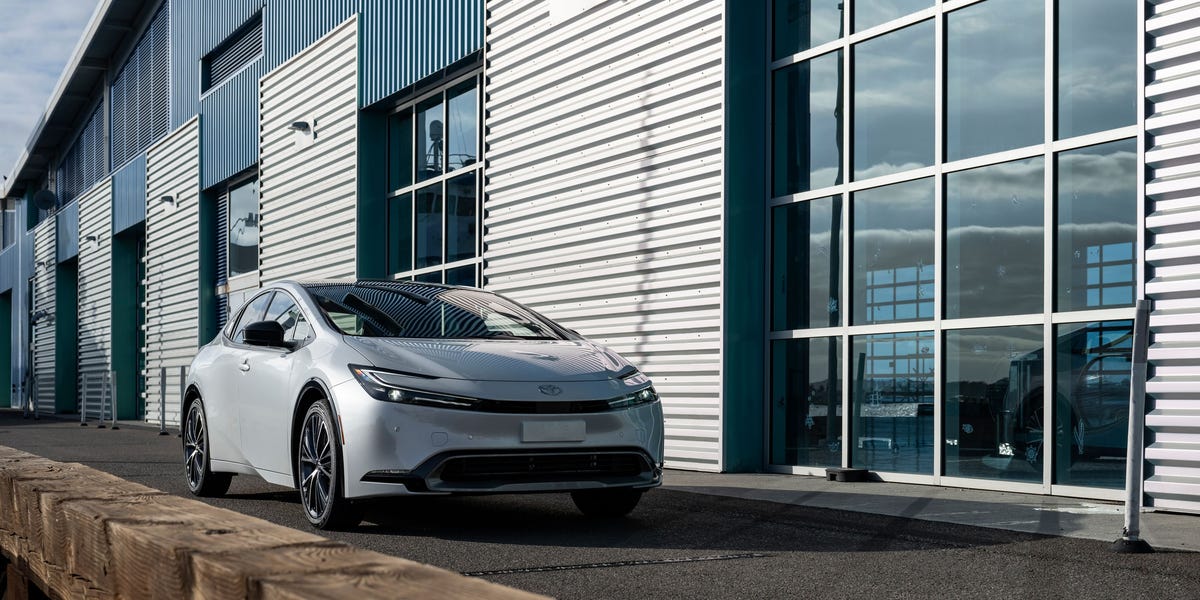
With environmental concerns growing and technology advancing, even in today’s fraught regulatory atmosphere there are growing numbers of electric cars on the market. But EVs aren’t perfect for everybody. If you have a long way to drive, can’t charge at home, or simply don’t want to spend that EV premium, you might want to consider a hybrid instead.
The modern hybrid has been a part of the U.S. market since Honda broke the mold with the original teardrop Insight. Toyota followed closely behind with the Prius. Since then, they’ve made significant gains in terms of both power and efficiency. (And, in the case of the Prius, style too.)
But how about reliability? Can all the extra electronics and batteries of a hybrid possibly make for a more dependable car?
Let’s dig into the details.
Hybrids vs. Plug-In Hybrids
Before we tackle the reliability question, a quick note on what differentiates hybrids from plug-in hybrids.
A hybrid car is any car that augments an internal-combustion engine with some sort of electric motor. That motor is typically used to help the car accelerate from a stop and decelerate back down to a standstill.
A plug-in hybrid is the same basic concept but generally with a more powerful motor (or motors) and a bigger battery pack to match. These cars also come with their namesake plug, allowing you to charge them up and drive for short distances on battery power alone.
The bigger battery packs generally used by PHEVs come with extra cost too, but the ability to drive emissions-free for as many as 50 miles (as in the case of a Range Rover P550e) can make for substantial fuel savings.
Batteries
If you’ve read our exhaustive guide to hybrid batteries, you know that they are advanced, complex things. There have certainly been plenty of advanced, complicated things that have gone horribly wrong in cars over the years (remember Ford’s PowerShift transmission?), but when it comes to batteries, that complexity is actually a good thing.
Though some hybrid batteries use a similar chemistry to the battery in your cellphone, the batteries in a hybrid or, better yet, a plug-in hybrid offer far more internal redundancy. In other words: While a year-old smartphone might struggle to make it through a single day on a charge, batteries in hybrids can survive far longer.

Battery pack in the 2011 Porsche Cayenne S Hybrid.
How long? In 2017, researchers at Carnegie Mellon University (CMU) developed a simulation to predict hybrid battery damage based on usage conditions. In the team’s worst-case scenario, a simple plug-in hybrid without battery cooling in a scorching area (Phoenix, Arizona, was their test case) would still offer 80 percent of its battery capacity after seven years of abuse.
However, most hybrids these days have onboard battery cooling to help mitigate damaging temperatures. By CMU estimates, that feature extends a battery pack’s life to 15 years, even if you’re in Phoenix. Live somewhere more temperate, like San Francisco? Expect 18 years before your pack loses 20 percent of its capacity.
Still skeptical? Take solace in the 100,000-mile warranties that most hybrids carry on their packs. Toyota goes even further, with 10-year, 150,000-mile warranties on their packs.
Brake Life
Hybrids use their electric motors not only to accelerate but also to brake. This process, called regenerative braking, uses the electric motor to convert momentum into electrical charge. That charge goes back into the battery for use when the light turns green again.

This is not only good for your fuel economy, it’s good for your brakes. An SAE International journal entry looked at various studies on regenerative brake usage and life, showing massively reduced wear in any car with regenerative braking. The conclusion was a projected pad life estimate of 186,000 miles.
Overall Reliability
Brakes are relatively affordable and easy to replace on most cars. Replacing an engine is a lot more tricky, but with hybrids, they get an easier go of it, too.
Since even the most basic hybrids rely on electric power to get up to speed from a stop, many of the demands of stop-and-go traffic are removed. And, since plug-in hybrids can often handle a whole commute on battery power, those engines might only get called into duty on special occasions.

But whether that results in greater overall reliability varies. The most recent Consumer Reports reliability findings, published in December 2025, show that hybrid cars, on average, come with 15 percent fewer issues than their gasoline-powered cousins.
The news isn’t so good for EVs and plug-in hybrids. On average, their more complicated systems didn’t fare so well, averaging 80 percent less reliable than straight internal-combustion cars.
Hybrid for the Win
There are many reasons why a hybrid is a smart buy for many shoppers. With a hybrid, you’re not only putting less stress on many mechanical components in your car, you’re also saving money on fuel and regular maintenance.
When it comes to plug-ins, from a pure reliability standpoint they tend to do worse. However, the additional cost and fuel savings make them well worth the risk for many buyers.
Shop for a Hybrid
➡️ Skip the lot. Let Car and Driver help you find your next car.
Shop New Cars Shop Used Cars
Tim Stevens is a freelance automotive and technology journalist with more than 25 years of experience. Tim frequently contributes to major domestic and international online, print, and broadcast news outlets, sharing his insights and perspectives on everything from cybersecurity to supercars. Based in upstate New York, when not writing about or working on cars he can often be found rebuilding pinball machines or getting lost in the woods.