

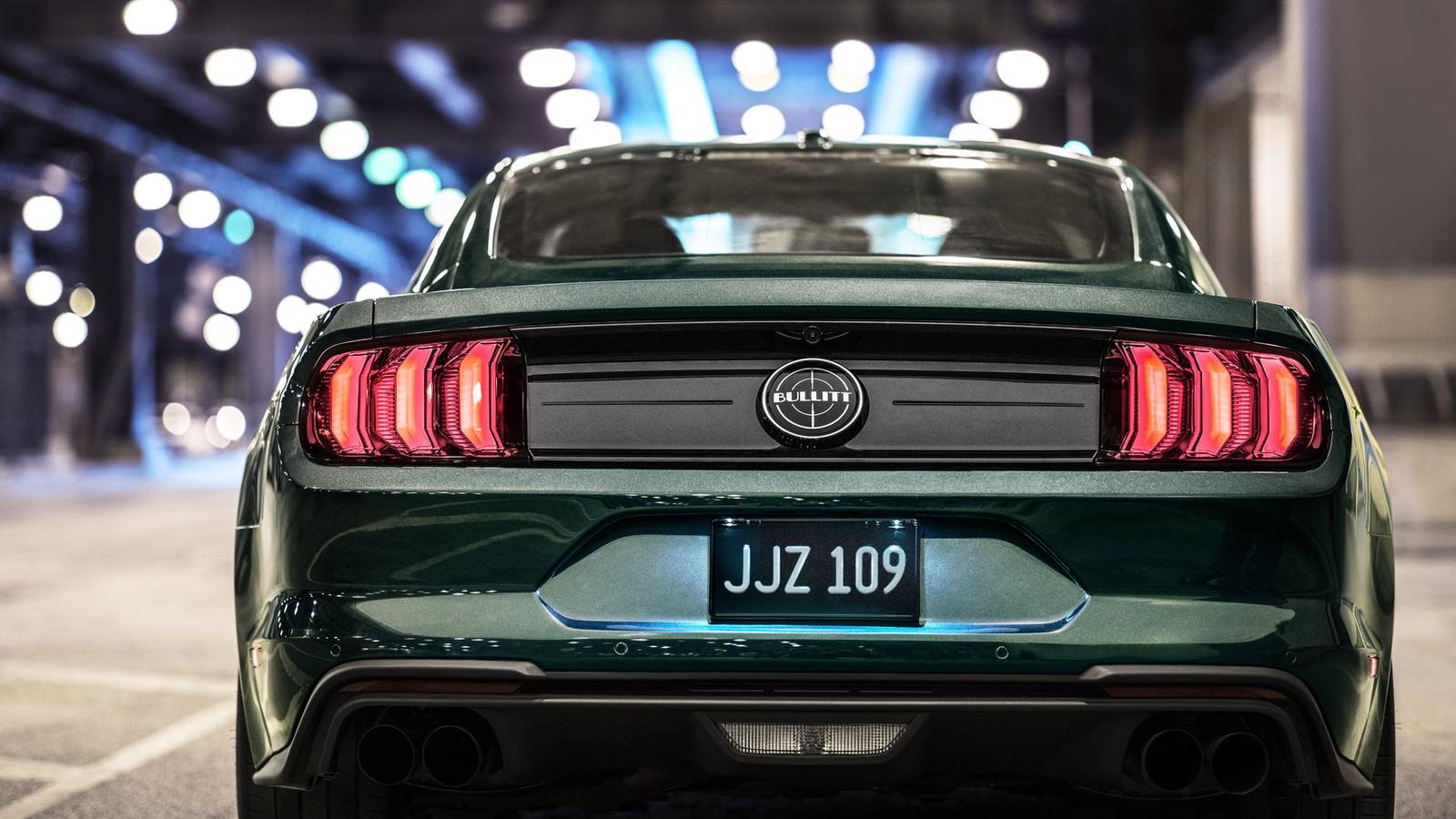
Much like the original Fast and the Furious movie did in the early 2000s, a film starring a certain Ford Mustang GT 390 finished in Highland Green created a whole new generation of car fans when it aired in 1968. The film, of course, is Bullitt, starring Steve McQueen as San Francisco detective Frank Bullitt, and it forever etched the Ford Mustang – and even the hilly streets where its legendary chase was filmed – into popular culture.
- Base Trim Engine
-
5.0L V8 Gas
- Base Trim Transmission
-
6-Speed Manual
- Base Trim Drivetrain
-
Rear-Wheel Drive
- Base Trim Horsepower
-
480 hp
- Base Trim Torque
-
420 lb-ft @ 4600 rpm
- Fuel Economy
-
14/23 MPG
Ford itself didn’t do much to capitalize on the movie’s popularity until much later, when in 2001 it launched the first Mustang Bullitt special edition. Two more would arrive in 2008 and 2019, offering not just a dose of nostalgia, but meaningful performance upgrades, proving that the legend was more than just cinematic.
Pricing details reflect the information available at the time of writing and may change over time.
How A Movie Car Became A Legend

The original film’s famous 10-minute chase involves McQueen in the Mustang following a black Dodge Charger R/T, piloted by stunt driver Bill Hickman, through the hilly streets of San Francisco. It starts off slow, but when the belt buckles go on, the cars are soon weaving around corners, barreling over curbs, and careening past unsuspecting traffic. Its tight, realistic driving, combined with a raw V8 soundtrack and the city’s steep inclines, created an intensity and authenticity rarely seen on film at the time. Even today, almost six decades on, it still sets the standard for filmmakers staging tense car chases.
While the rest of the film isn’t always hailed as a cinematic masterpiece, with critics noting its slow pacing and somewhat convoluted plot, it stands out for its realism and lack of melodrama, anchored by the restrained, cool, minimalist performance of McQueen. A genuine car enthusiast and accomplished racing driver, McQueen did much of his own driving for the film, and his firsthand experience on the track shaped the production. For example, his guidance on camera angles during the chase help turn those 10 minutes into a cinematic milestone.

Interestingly, two 1968 Mustang GT 390s were used for filming. One was wrecked and sold as scrap (though recently discovered in Mexico) but the surviving car ended up with Robert Kiernan, who purchased it shortly after filming wrapped up for $6,000, after seeing an ad for it. Kiernan held onto the car for decades, even refusing an offer from McQueen to purchase it. It was finally sold at auction in 2020 by Kiernan’s son, fetching $3.74 million.
Like that original car, Ford’s modern series of Mustang Bullitt editions have, in their own way, blurred the line between cinema and reality like few movie specials ever have. Much like McQueen and his portrayal of Frank Bullitt behind the wheel, these cars deliver understated, genuine performance without shouting for attention. Instead of flashy stripes or bold badges, you get a powerful V8 engine combined with modifications designed to shore up the handling. It’s a subtle nod to a legend, a car that lets the driving speak for itself.
Meet The Modern Successors

2001 Ford Mustang Bullitt
Ford finally cashed in on the aura of the movie car by introducing the first Mustang Bullitt in 2001. Staying true to the original, it arrived in Highland Green with deleted exterior badges and subtle styling cues for a clean, understated look. This was a one-year-only, limited edition, based on the fourth-generation Mustang. While the stock GT offered 260 horsepower, the Bullitt added five extra horses and received a more focused chassis. Specific modifications included a revised intake, underdrive pulleys, stiffer suspension, and subframe connectors, giving it sharper handling and a more connected, driver-focused feel, though nothing on the same level as the more hardcore and more expensive SVT Cobra.
2008–2009 Ford Mustang Bullitt

The Mustang Bullitt returned for the 2008 model year, coinciding with the 40th anniversary of the film. The car this time was based on the fifth-generation Mustang and was offered for two years. Ford kept to the same formula as the previous car, but upped the level of tuning and this time also included a recreation of the movie car’s white cue ball shifter. Power was increased by 15 hp over the stock GT’s 300-hp rating, and the chassis tuned for a sharper drive, including with parts developed by Ford Racing. There were new shocks, struts, brake pads, and a performance sway bar, and the old live rear axle given a higher 3.73:1 ratio for better acceleration.
2019-2020 Ford Mustang Bullitt

With the arrival of the sixth-generation Mustang and its new Coyote 5.0-liter V8, the standard Mustang GT was already a formidable performer. Ford nonetheless pushed the envelope further with the 2019 Mustang Bullitt, boosting output by 20 hp over the stock GT’s 460 hp. This came thanks in part to performance goodies borrowed from the hardcore Mustang Shelby GT350, including an upgraded intake manifold and larger throttle bodies. Other enhancements included Brembo brakes, aerodynamic tweaks, and chassis refinements to sharpen handling. While the Bullitt disappeared again after 2020, Ford carried most of its upgrades, and then some, into the 2021 Mustang Mach 1.
|
|
2001 |
2008-2009 |
2019-2020 |
|---|---|---|---|
|
Engine |
4.6-liter V8 |
4.6-liter V8 |
5.0-liter V8 |
|
Power |
265 hp |
315 hp |
480 hp |
|
Torque |
305 lb-ft |
325 lb-ft |
420 lb-ft |
|
0-60 mph |
5.5 seconds |
5 seconds |
4–4.5 seconds |
A Great Car Even If You’re Not A McQueen Fan

Even if you’ve never seen Bullitt, the Mustang Bullitt ranks among the better Mustangs, particularly the final version based on the sixth-generation car. Finished in Highland Green, or more discreetly in Shadow Black, and riding on Torq Thrust-style 19-inch wheels, it drops subtle hints for those who know what they’re looking at. For everyone else, it’s simply a clean, restrained fastback – one that just happens to pack nearly 500 hp under the hood.
Based on the Mustang GT Premium, the Bullitt came standard with a six-speed manual and the Mustang’s Performance package. While the Premium trim handles comfort duties, the Performance pack’s hardware is serious: six-piston Brembo brakes, a strut-tower brace and K-brace, heavy-duty front springs, a thicker rear sway bar, a Torsen differential with 3.73 gearing, and an upgraded radiator. Revised stability-control and ABS tuning, subtle aero tweaks, and aluminum interior accents complete a package that feels cohesive rather than cosmetic.

Today, the market reflects that balance. Examples start around $30,000 for higher-mileage cars, with sub-50,000-mile examples closer to $35,000. Considering an original sticker of $46,595, the Bullitt has held its value respectably, which is proof that understated performance never goes out of style.
Screen Legend, Street Weapon

Nearly six decades after Bullitt first lit up theaters, the Mustang Bullitt remains a rare thing: a movie car that backs up its mythology with mechanical credibility. It has never relied on stripes or aggressive aero to make its point. Instead, it delivers performance wrapped in restraint, the kind enthusiasts appreciate long after trends fade.
And with the film’s 60th anniversary just two years away, another Bullitt feels not just possible, but likely, perhaps offering Mustang Dark Horse levels of pace dressed in a more elegant suit. And with rumors of Steven Spielberg planning a new movie centered on the Frank Bullitt character, with Bradley Cooper tipped for the role, we could see a Mustang in Highland Green also return to the silver screen in the not too distant future.
Sources: Ford