


A car’s suspension is a collaboration of springs, shocks, struts, and other parts that serve to stabilize your car’s platform while absorbing surface inconsistencies to help maintain passenger comfort. Suspension systems typically require only minimal maintenance. However, as with any of a car’s moving parts, the suspension components can eventually wear out. Gary Hardesty, ASE-certified master technician and Kelley Blue Book’s in-house service and maintenance expert, says these are the 10 telltale signs that indicate your car’s suspension could need service.
10 Signs Your Suspension Is Going Bad
1. Difficulty Steering
When driving, the steering wheel should be steady. The suspension and steering systems work in tandem, so if the steering wheel feels shaky, loose, or abnormally stiff, the issue may be with the suspension.
2. Vehicle Pulling to One Side
If the car pulls to the left or the right as you drive, it could be a sign that the front wheels are out of alignment or some suspension component is failing. Prolonged driving with misaligned wheels will put undue stress on other suspension components, causing them to fail eventually. While pulling is often alignment-related, it can also be from tire or brake issues. Regardless, get it inspected.
3. Excess and Uneven Tire Wear

Cupping and ridges in your tires are a signal that your suspension may be failing.
Although some instances of uneven tire wear come from improper air pressure, the cause is often a faulty suspension. Worn bushings and joints can let alignment shift. Worn shocks and struts can cause cupping by failing to control tire movement.
4. Leaking Around Shocks and Struts
A fluid leak from the area around the tires could be from the shocks or struts. If the shock or strut body is wet with oil, that points to a damper leak. We recommend visiting a service and repair center promptly when you encounter a leak around or above your tires because it could be brake fluid.
5. Unusual Noises
If you suddenly notice squeaking, clunking, or knocking sounds when driving over bumps, it’s often a signal that one or more suspension components are failing.
6. Car Bounces After a Speed Bump

A speed bump helps ensure you are maintaining the speed limit, particularly in residential areas with high pedestrian traffic. However, it may also serve as an early warning system that your suspension is failing. For example, if your car continues to bounce after going over a speed bump, worn springs or struts may be the culprit.
As the suspension wears out, the springs, shocks, and struts can lose their elasticity. In other words, they don’t rebound as well as they should.
A quick way to test if your car’s suspension is bad is by pressing down on the rear bumper when parked. Once you let go, it should return to its original position. But if it is bouncy and doesn’t return to its normal position, it’s a clue that the suspension could be failing.
7. Vehicle Leaning to One Side
One corner or one side of a car resting lower than the other usually indicates a damaged spring, causing the vehicle to list.
8. Abnormal Swaying or Body Roll
Excessive swaying or body roll when taking curves indicates the suspension isn’t properly stabilizing the vehicle. This is often a sign that suspension components are failing.
9. Diving or Squatting
If, during normal braking, the front end (nose) dips excessively or dives more than normal, it’s a clear sign of suspension failure. This is also true if, when normally accelerating, the rear end squats. More often than not, worn shocks or struts are the culprit.
10. Bottoming Out
In extreme cases, the suspension system can no longer fully support the vehicle’s weight, and the chassis will come into contact with the road with every small bump. This is called bottoming out. As it grows more severe, it also puts other mechanical components, such as the oil pan and transmission, at risk. It’s also a safety issue because you may lose steering control. To reach the point of bottoming out, you’ve undoubtedly disregarded one or more of the other warning signs we’ve listed. You absolutely shouldn’t ignore this one.
Diagnosing Suspension Issues
As with almost everything else today, diagnosing suspension issues is more reliable and accessible than ever before. Modern diagnostics help most when the vehicle has electronic suspension and chassis controls. Many wear issues still require a hands-on inspection. Remember that the burden of ensuring a car receives such comprehensive inspections rests with the owner. Have your car checked when you first notice any of the signs we’ve listed above.
How Much Will a Suspension System Repair Cost?
The odds of your entire suspension system failing at the same time are slim. Car suspension systems have many components that can, and likely will, fail at different times. Replacing struts costs several hundred dollars per corner, depending on the model. In broad terms, addressing issues at all four wheels in a mainstream vehicle could cost between $1,000 and $4,000.
Tips to Help Avoid Expensive Suspension Damage
While suspension components will wear out over time regardless of driver behavior or attention, there are a few actions drivers can take to avoid hastening that process.
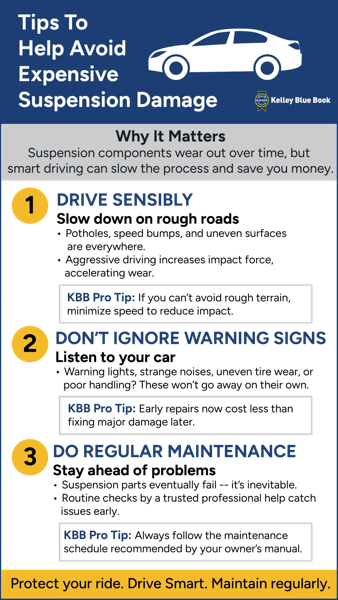
- Drive sensibly: Extreme weather-caused damage and lack of regular road maintenance mean most drivers are forced to navigate potholes and corrugated surfaces every day. Moreover, installed speed bumps, rough railroad crossings, pavement disruptions from road repair, and other human-caused imperfections add to the problem. In other words, today’s roads are a risky environment for a vehicle’s suspension. Overly aggressive driving multiplies the threat. It increases the force of impact with every road imperfection encountered. The greater the force of impact, the more likely suspension components are to sustain increased wear and tear, if not outright damage. If you can’t avoid badly damaged surfaces, at least slow down to minimize the impact.
- Don’t ignore the warning signs: Any one of the warning signs we listed above can lead to more severe damage if not addressed. They won’t go away on their own. Spending the money now to repair the suspension issue will save you even more money down the road.
- Regular inspection and maintenance: Suspension components will inevitably wear out and eventually fail. Regular periodic inspections by a trained professional can often reveal suspension issues before they become serious problems. We recommend always following the scheduled maintenance as outlined in your vehicle’s owner’s manual.
Editor’s Note: We have updated this article since its initial publication. Austin Morris contributed to the report.