

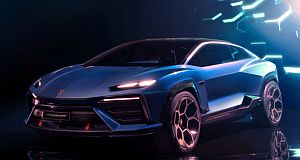

LAMBORGHINI has officially pulled the pin on its first battery electric model – which would’ve been called the Lanzador (pictured) – due to a lack of demand for EVs within the Italian performance brand’s customer base.
Speaking with The Sunday Times, Lamborghini chairman and CEO Stephan Winkelmann cited the inability of electric vehicles to deliver a “specific emotional connection” for Lamborghini customers as a reason behind the decision.
Mr Winkelmann went on to say that Lamborghini investing heavily in EVs when neither the market nor its customers are ready for them “would be an expensive hobby, and financially irresponsible towards shareholders, customers (and) to our employees and their families”.
In May 2021, Lamborghini announced the introduction of a battery electric model into its stable by 2030. A little over two years later in August 2023, the Lanzador high-riding, 2+2 SUV ‘coupe’ concept was unveiled during Monterey Car Week.
Initially slated for arrival in 2028, the Lanzador would’ve arrived with a dual-motor, all-wheel drive powertrain with an output of one megawatt (1000kW).
In December 2024, Mr Winkelmann told Reuters the Lanzador had been delayed until 2029, but now Lamborghini’s first foray into the battery electric vehicle market has been officially scrapped.
Instead, the electric Lanzador will be replaced with a plug-in hybrid vehicle like the currently-offered Temerario and Revuelto supercars and the Urus SE SUV.
Meanwhile, arch rival Ferrari is charging towards the launch of its first EV model – dubbed the Luce – with its full global unveiling expected in May this year with Australian deliveries slated for the first half of 2027.
However, Lamborghini is not alone among performance brands shying away from the EV transition.
Over at corporate cousin Porsche, the battery electric versions of the 718 Cayman and Boxster sportscars could be scrapped entirely due to high costs and low demand for EVs.
In 2024, Lotus – which sells its internal combustion-powered Emira sportscar alongside the battery electric Eletre SUV, and Emeya sedan in Australia – cancelled its plans to go all-electric by 2028, instead placing a great focus on the development of hybrid technology.
In January last year, Aston Martin delayed its EV plans by five years, while Maserati scrapped an electric variant of its MC20 supercar in May the same year, although the latter still sells electric versions of its GranTurismo, GranCabrio, and Grecale models.
Furthermore, the European Union is poised to scale back its 2035 internal combustion engine ban from a 100 per cent to a 90 per cent CO2 reduction.
However, Lamborghini has not entirely ruled out EV models in the future according to Mr Winkelmann.
“Never say never, but only when the time is right,” he added.
“For the foreseeable future, only PHEVs. We will continue to develop electrification because we also need to be ready.”