

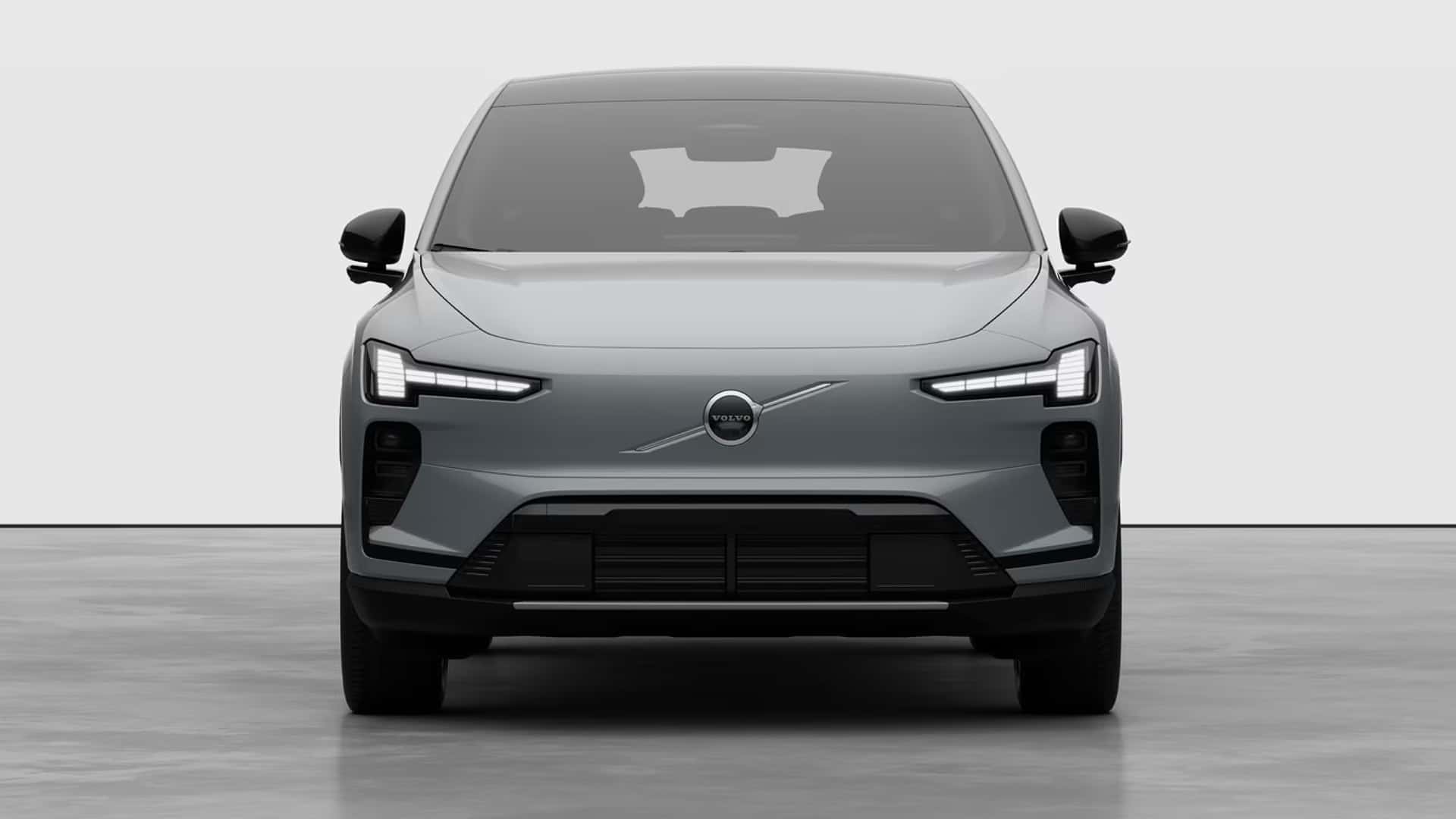
- The Volvo EX30 and EX90 had a lot of software issues, in part because they were the brand’s first software-defined vehicles.
- The forthcoming EX60 will use the same fundamental software as the EX30 and EX90, just with some new capabilities.
- That should make it a much smoother launch. But if you’re not ok with teething issues, you may still want to wait, as most software-defined vehicles have launched with bugs in the past.
The transition to software-defined vehicles hasn’t been easy for anybody. But in a sea of struggling companies, Volvo is among the most bruised.
Its all-electric EX30 and EX90 were heavily delayed by software issues, yet still arrived buggy and unfinished, forcing Volvo to spend much of last year quashing bugs over-the-air. Screens were glitchy, the keyless entry systems often failed, and in a few harrowing cases, the vehicle lost power on the highway. Consumers and dealers revolted, setting the company’s brand image and electrification plans back significantly.
“This was a tough process,” re-appointed Volvo CEO Håkan Samuelsson told reporters during the launch of the electric EX60. But the past is the past, he insisted. With the EX60, Volvo’s most important EV ever, it won’t happen again. Here’s why, and whether you should believe him.

Photo by: Volvo
(Full Disclosure: Volvo flew me to Stockholm, Sweden for the launch of the EX90. I was given lodging and, as part of a group, access to executives for interviews.)
A Big Change
Consumers who are surprised by EV teething issues often don’t realize how different the design and production process can be. Vehicles like the Volvo EX90, Tesla Model Y and Rivian R1 are what experts call “software-defined vehicles.” This doesn’t just mean they have sleek screens and snappy software; it’s a new approach to building vehicles, pioneered by Tesla.
Car companies have typically farmed out production of most of their parts to external suppliers. For hardware, that makes sense, and it’s still how most brands operate. But adopting the same process for software has led to a confusing mess of sub-systems that can’t talk to each other. The supplier of the system that handles keyless entry and ignition is different from the one that builds the window control logic, and they can’t talk to each other. The future is a lot more interconnected.
“Level one is this domain-based system, which has served us extremely well, where you essentially build a car [by] connecting independent systems: braking, steering, ADAS, etc, and then pretty rudimentary communication between the systems,” Volvo Chief Technology Officer Anders Bell told reporters at the EX60 launch.
As automakers add more features to a conventional architecture, a domain-based approach integrating separate sub-systems introduces constant bottlenecks.
“You’re building more and more and more and more complexity […] the more functionality you add, the more complexity you add. This is a massive reset on that button,” he said, referring to the company’s new software approach. “We can’t keep on doing it [the old way] because it doesn’t benefit the customer.”
Teslas, Rivians, EX90s and other new EVs have moved beyond that original domain-based approach. With “software-defined vehicles,” the automaker controls the entire software stack of the car, including owning the software that runs its various sub-systems. They design their own zonal architectures.
That has a large number of benefits: SDVs can be lighter, require less complicated wiring designs, can be made easier to diagnose and repair and require fewer proprietary components. The whole system is also easier to upgrade and enables cross-domain functionality, so that a camera for the advanced highway driving assistant can also be used for parking and security monitoring functions.
Photo by: Volvo
All of these benefits come with one major cost: they are far, far harder to develop. A car company used to only have to primarily worry about integrating the functions of different components; now it must design them from whole cloth, and ensure that future updates do not break those designs. But the payoff, automakers argue, is worth it.
“It’s going central, which is a big game changer, because you can be much faster, both in introducing new features and fixing problems,” Samuelsson said. “Instead of calling and begging somebody else to make a change, now we can just code the change ourselves. It’s really game-changing.”
154
Source: InsideEVs
Teething Issues
But turning a car company into a software company is a long and messy process.
Automakers buy software from highly specialized suppliers that certify and then ship a final product. Software companies build a stack from the ground up, get it to its nearly polished shape, ship it and then spend years supporting it, with bug fixes and feature releases.
The headaches with the EX90 included key-detection issues, screen blackouts and power-loss issues—the early mistakes of a new system design. The current software build is significantly more stable, and a free upgrade for EX90 buyers to the next-generation computer from the forthcoming EX60 should help smooth further development.
Photo by: Volvo
“I’m trying to be fair and help the customers who have had the EX90s,” Samuelsson said. A company spokesperson added that Volvo corporate had set up a program to cover dealer costs in taking care of EX90 customers, and the over-the-air addition of new functionality and bug fixes, as examples.
But the most important part is not repeating the mistakes. On this front, Samuelsson struck a confident tone. Despite running on a new architecture and with some upgrades over the EX90, the EX60 is starting from a more mature baseline. The hard part of the turnaround was building the core software base, and most of that will carry over from the updated EX90. The point is, Samuelsson isn’t expecting issues.
Photo by: Volvo
“It was mainly software [issues]. So, I mean, I’m not too worried about hardware. We’re always good with that,” the CEO said. “And when it comes to software and electronic architecture, that’s the part that has the most carryover. So after all the teething problems we’ve had, now the software package, I would say, is in good shape. That will be carried over into the new car.”
One Key Advantage
Samuelsson also has one reason to feel confident. While Volvo may have had a hell of a time launching its first true software-defined vehicle platform, that still puts it ahead of many brands, which haven’t launched SDVs. Many traditional automakers now have plenty of experience building EVs, but Volvo already beat all of them to the software-defined vehicle punch with the EX90. The rest will have to cross their own Rubicon. It may not be as wide as Volvo’s, but at least Volvo’s is, ostensibly, behind it.
“Now we have a central compute system where I think we are well ahead of the others,” Samuelsson said. As BMW, Mercedes, Honda, General Motors and others gear up to launch their first true SDVs, don’t be surprised if some of them run into teething issues, too. No one is getting this stuff right on the first try.
Photo by: BMW
Should You Believe Volvo?
Let’s be real: Every CEO is going to say that their company’s problems are in the past. But should you trust this one, and plunk down a reservation for an EX60?
The truth is that all-new products are always a gamble until they are here. Some are higher risk, some are lower risk, but all are inherently unknowable. We don’t know if a car is reliable or stable until it is released, and sometimes not until years after.
Photo by: Volvo
What I will say is that the EX60 appears to be less of a risk now. With the EX30 and EX90, Volvo was doing these things for the first time. Now, it’s doing them for the second or third time. That’s an improvement, but there may still be snags along the way.
If you’re ok with that, and understand that you may have to wait for software updates to patch launch-day issues, go ahead and put down a reservation. But if you don’t want to deal with teething issues, my advice is more dire: Don’t buy any all-new software-defined vehicle in the first year of production. Give them some time to fix the problems over-the-air.
After all, that’s the whole idea, isn’t it?
Contact the author: Mack.Hogan@insideevs.com