

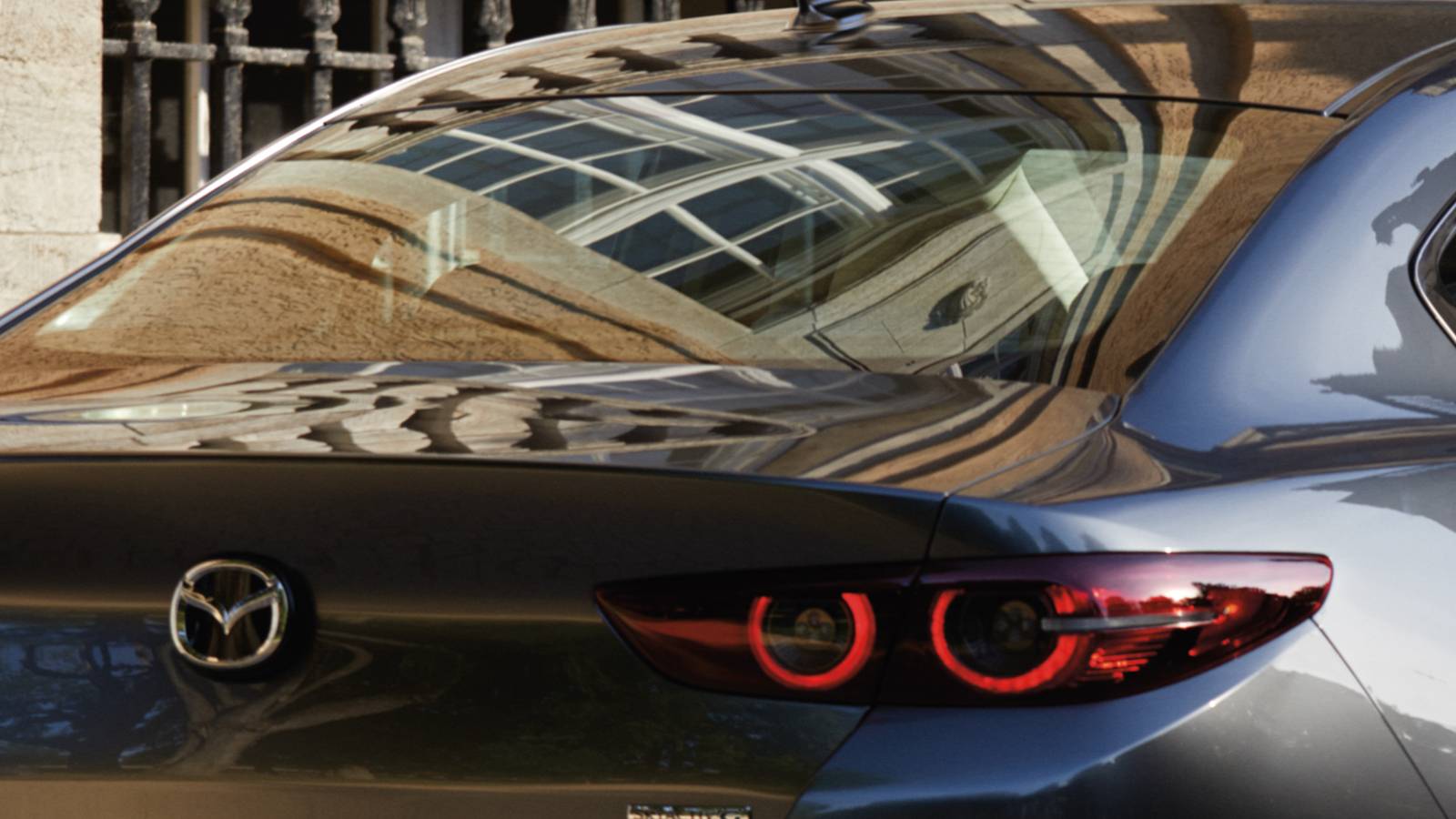
The Mazda 3 Sedan is the Japanese brand’s entry-level sedan offering and, following the retirement of the Mazda 6 from the North American lineup, is the only four-door sedan Mazda USA offers – rivaling other compact sedans like the Toyota Corolla and Nissan Sentra. However, while its Japanese roots and engineering do mean reliability is on Mazda’s side, not all Mazda 3 Sedan generations are ranked equally when it comes to reliability. We’ll review all generations of the Mazda 3 Sedan to discuss some of their common issues mechanically, ranking them from worst to best, based on their reliability records.
- Base Trim Engine
-
2.5L SKYACTIV-G I4 ICE
- Base Trim Transmission
-
SKYACTIV-Drive 6-speed automatic
- Base Trim Drivetrain
-
Front-Wheel Drive
- Base Trim Horsepower
-
186 HP @6000 RPM
- Base Trim Torque
-
186 lb.-ft. @ 4000 RPM
- Base Trim Fuel Economy (city/highway/combined)
-
27/36/30 MPG
This analysis is based on a variety of reputable sources for reliability, taking into account the number and severity of consumer complaints and recalls. J.D. Power quality and reliability ratings have been included, if available. J.D. Power ratings are an assessment of initial reliability, not long-term reliability, so all of the above factors are considered together. We rank these generations from least to most reliable.
We have excluded the 2022 and newer 4th-generation Mazda 3 Sedan as, currently, there is not enough sufficient reliability data available at this time.
|
Mazda 3 Overview – 1st-4th Generations |
||||
|---|---|---|---|---|
|
1st Gen |
2nd Gen |
3rd Gen |
4th Gen |
|
|
Model Years |
2004–2009 |
2010–2013 |
2014–2018 |
2019–2021 |
|
Engine |
2.0L, 2.3L Naturally Aspirated Inline Four-cylinder |
2.0L, 2.5L Naturally Aspirated Inline Four-cylinder |
2.0L, 2.5L Naturally Aspirated Inline Four-cylinder |
|
|
Transmission |
|
|
6-speed Automatic/Manual Transmission |
6-speed Automatic/Manual Transmission |
|
Drivetrain |
FWD |
FWD, AWD |
||
4
Second Generation (BL): 2010–2013
Highest J.D. Power Rating: 83/100 (MY 2010)
Out of all the Mazda 3 generations, the second-gen models are considered the most trouble-prone. Produced from 2010 to 2013, the second-generation Mazda 3, known internally as the BL-generation, saw an all-new front fascia define this model. There was no shortage of comments comparing its resemblance to a grin, leading to its aforementioned nickname of Mazda’s ‘smiling grille’. Mazda’s new generation of engines, known as ‘SKYACTIV,’ made its debut in post-update models of the Mazda 3 2012, which all Mazda 3s have used since.
Common Issues: Second-gen (BL) Mazda 3
- Clutch problems
- Powertrain issues
- Electrical issues
The second-generation Mazda 3 Sedans are among the models with the most serious complaints, as well as models with the most complaints out of all generations, according to both Car Complaints and NHTSA data, with 2010 models in particular recording the highest number of recalls and complaints out of all years of the second-gen.
Some of the most reported issues affecting these models include electrical problems caused by faulty control modules, with the Transmission Control Module (TCM) being a particular concern in recent years, resulting in multiple reports of drivetrain failure. 2010 Mazda 3s are also reported to have problematic clutches on the manual-equipped models, with many experiencing premature wear or failure, but to the frustration of many owners, Mazda has not issued an official recall to rectify this faulty component.
“The 2010 Mazda MAZDA3 has the most overall complaints, & we also rate 2010 as the worst model year ranked on several factors such as repair cost & average mileage when problems occur. Issues with clutch failure might be giving 2010 MAZDA3 owners headaches, but the lack of support from Mazda is giving them migraines.”
3
Third Generation (BM/BN): 2014–2018
Highest J.D. Power Tating: 78/100 (MY 2014)
The third-generation Mazda 3 sedans slot in the middle in terms of overall reliability and potential issues they face.
Introduced for the 2014 model year, the third-gen Mazda 3 was the first iteration to incorporate the Japanese brand’s ‘Kodo’ design language, defining models like the Mazda 3 Sedan with a sharper body profile and front grille design. Mazda’s i-Connect infotainment system also debuted in this model. Engine choices remained the same, with either a 2.0L or 2.5L naturally aspirated four-cylinder paired to automatic or manual transmissions, both of which now came with SKYACTIV technology as standard.
Common Issues: Third-gen (BM/BN) Mazda 3
- Air conditioning/heater system issues
- Automatic transmission slipping
- Braking system/component issues (premature brake wear, handbrake failure)
- Interior accessories issues (infotainment system crashing, backup camera not displaying, keyfob not working)
Most years of this Mazda 3 generation prove to be quite reliable, minus the first-year models (2014) that bore most of the initial build-quality issues expected of a new car, especially with a then-all-new engine design. A few early models have also experienced the (automatic) transmission slipping, but these are limited to a select few compared to a wider spread that have had issues with their air conditioning/heater systems.
A more prevalent problem focuses on premature brake wear or intermittent issues affecting the braking system, as noted by a previous recall issued by Mazda. This generation isn’t unreliable per se, but when considering the number of complaints and severity across all generations, we judge third-gen Mazda 3s to only be slightly better in this regard when viewing them under the context of a potential secondhand purchase.
“Mazda North American Operations (Mazda) is recalling certain 2014-2015 Mazda6 and 2014-2016 Mazda3 vehicles. Water could possibly enter the brake caliper causing the parking brake actuator shaft to corrode and possibly bind.”
2
First Generation (BK): 2004–2009
Highest J.D. Power Rating: 76/100 (2009MY)
Among the older iterations of the Mazda 3 still in the used market, the first-generation models are proving to be quite solid products, even after more than ten years since their production run ended.
The first iteration, known as the BK-generation of the Mazda 3, was available both as a four-door sedan and five-door hatchback for the North American market, serving as an all-new model to replace the aging Mazda Protege as the brand’s smallest model (until the introduction of the subcompact Mazda 2). All models featured the four-cylinder engine from Mazda’s ‘MZR’ engine series, paired to either a four-speed automatic or five-speed manual transmission.
Common Issues: First-gen Mazda 3 Sedan
- Transmission issues
- Body/paintwork issues (corrosion, paint flaking off, water ingress)
- Engine issues (excessive oil consumption, coolant system failure)
- Engine, transmission mount failure
The majority of complaints or issues these have experienced in recent years are largely due to the car’s age, given that some are nearing more than twenty years old. Hence, it’s not uncommon for models of this generation to experience minor body and paintwork issues (wear, flaking/clear coat coming off) as is expected with a car of this age. Rust/corrosion on the body and chassis can also be something to look out for, but depending on where the car has spent the majority of its life and past treatment, it may not be a serious concern, as some may think.
Both four-cylinder engines, when maintained to schedule, report no serious problems, but components like suspension parts and engine mounts are consumables worth looking into replacing, especially among high-mileage and well-used examples.
But as far as some of the oldest cars from the 2000s era go, the first-generation Mazda 3s are held quite high in terms of their reliability, and are very likely to serve for many more years to come when given regular care and maintenance.
“Except for a minor issue with cracked motor mounts, the 2008 MAZDA3 is a fantastic vehicle with a great reputation. If you need to replace the motor mounts, first ask your dealer if they’ll cover it – the motor mounts were dealt with in a TSB & were recalled for some model years. Otherwise, buy aftermarket motor mounts – owners report this solves the problem. If you use the same OEM parts, they may just crack again.”
1
Fourth Generation (BP): 2019–2021
Highest J.D. Power Rating: 81/100 (2022 MY)
Where research meets the right deal
The most up-to-date generation of the Mazda 3 Sedan ranks as the least problematic here when it comes to overall reliability. The Mazda 3, in its latest form, referred to as the BP-generation, improves upon the striking design of its predecessor, notably updating the cabin to a more upmarket appearance with a slimmer infotainment screen. Improvements were made underneath the car as well, with better sound insulation materials, a more dynamic suspension setup, and torque vectoring system were just some of the new changes Mazda added. All-wheel drive was finally made an option for the Mazda 3 sedan following the latest facelift, exclusive to the 2.5L turbocharged four-cylinder variant.
Common Issues: Fourth-gen Mazda 3 Sedan
- Interior accessories issues
- Excessive oil consumption
- Body/paintwork issues
Being the youngest Mazda 3 models out of all generations plays to their advantage, with pre-facelift fourth-generation Mazda 3 Sedans having little to no recalls issued, according to the most up-to-date NHTSA data. Previously, we also recommended the 2018 Mazda 3 Sedan as the model least likely to prove troublesome, being the model with the fewest number of complaints on CarComplaints.
The BP generation is not entirely bulletproof, though, especially with those made in 2021 featuring the more complex turbocharged engine versus the naturally-aspirated units, as they were subject to a class action settlement over excessive oil consumption and faulty valve stem seals. It is worth noting that models after 2021 may be more reliable, as the fourth generation is still ongoing, but reliability data for these cars is not widely available or accurate yet.
Summary: A Solid Track Record

In reality, the Mazda 3 Sedan is proving to be one of the least troublesome cars on the market, both in its latest form currently on sale in showrooms and among its older models in the secondhand market. This sedan from Mazda’s lineup, in general, has proved to be a relatively solid product compared to rivals, especially far more expensive compact sedans. We judge the most ideal models to be among the Mazda 3 Sedan’s oldest and youngest examples – specifically the first generation (BK-generation) and fourth generation (BP-generation) currently available on the secondhand market.
As with any used car, it’s highly advised to perform a pre-purchase inspection or arrange for a qualified technician to fully inspect whatever Mazda 3 you are looking to buy to confirm it has a clean bill of health and is not hiding any concerning issues or sketchy history. But if it passes with no pressing concerns, there’s no reason why you should ignore going for one of these to serve as your next daily driver.
Sources: Mazda, CarComplaints, NHTSA, J.D. Power