

Quick Facts on EV Battery Drain
- EV range drops significantly in freezing temperatures.
- Steady highway driving drains the battery faster than start-and-stop city driving.
- Infotainment screens and other electronics consume little battery power.
Battery range is top of mind for most electric vehicle owners and potential buyers. Whether you have a long commute, take frequent road trips, or just run quick errands around town, it helps to know where the battery power in your electric car is going. Here are things that can drain your EV battery.

Make Every Charge Count
Stretch your EV range
Four easy habits can help you use energy more efficiently. Tap each one to learn why.
Tap a stop along the route to see why it helps.
Small changes can add up, especially on highway trips and in extreme weather.
Graphic: Tawana Campbell
MORE: How Much Does It Cost to Charge an Electric Car?
Driving
First things first, driving your electric car will always drain the battery. An EV battery provides the power needed to move the vehicle. Higher speeds require more energy than lower speeds. How quickly the battery drains also depends on the other energy-consuming systems you use.
“Steady driving at highway speed drains the battery much faster than driving in stop-and-go traffic,” said Kelley Blue Book Senior Advice Editor Chris Hardesty. “Electric cars have regenerative braking systems that put some energy back into the battery when coasting and braking. So, unlike gas-powered cars, EVs typically get better mileage in the city than when cruising down the interstate.”
Quick Fact: Highway driving can deplete the battery quickly due less opportunity for regenerative braking, along with increased wind resistance, tire friction, and higher speeds.
RELATED: Electric Car Range: Everything You Need to Know
Acceleration
How hard you press the pedal greatly impacts your battery range. Quick acceleration requires a significant burst of energy. This surge is especially noticeable in vehicles with a boost button or similar feature. Smooth acceleration helps extend battery range. If you’re trying to maximize every charge in your EV, go easy on the “go” pedal.
MORE: Electric Cars 101: What You Need to Know About EVs
EV Range at a Glance
EV battery consumption at a glance
Some things matter a lot more than others. Tap each item for the quick take.
Select a category above to see how much it typically affects your driving range.
Graphic: Tawana Campbell
Weather Conditions
Environmental conditions can cause your battery range to fluctuate, but frigid temperatures can significantly reduce range. It requires more energy to keep your battery at its optimal temperature when it’s cold outside, so you’ll likely need to charge your EV more frequently during the winter months.
“Weather-related battery drain can be a serious issue for EV drivers in cold climates,” said Eric Brandt, managing editor of Vehicle Reviews at Kelley Blue Book. “A study by Recurrent shows that EV range can drop by up to 32% in freezing temperatures. This is important to keep in mind if you need the full range of your EV for it to be usable in everyday driving.”
RELATED ARTICLE: How Long Does It Take To Charge an Electric Car?
Heat and Air Conditioning
It takes more energy to keep the cabin warm during periods of extreme cold. Bumping up the heat for comfort while driving draws more energy from the battery. Similarly, blasting the air conditioner when it’s hot outside reduces range. Controlling the cabin and battery temperature is the biggest power drain, second to driving the vehicle.
While running the heat may drain the battery, heated seats generally use less energy. “Heated seats only need to power a small heating element underneath the upholstery, so they use less energy than the full heating system, which uses a fan to circulate air through the cabin,” said Kelley Blue Book Editor Chris Teague. “If your car has heated seats, they can help save a little battery life on cold commutes.”
Weight
The size of your EV, the total passenger load, and cargo load you carry all play a role in draining the battery. Batteries expend less energy to move lighter loads, so keep that in mind during your next road trip. Pack light if your goal is to stop less often to recharge. EV drivers wanting better battery efficiency can follow some of the same tips used in hypermiling with gas cars. For example, keeping unnecessary gear and heavy things, such as spare bags of dog food or cat litter, out of the vehicle can help extend the time between charging sessions.
RELATED: EV Charging Stations: Everything You Need To Know
Navigation and Infotainment Systems
Today’s larger infotainment screens require more energy to operate than smaller systems from a few years ago. Rear-seat screens and USB ports used to charge electronic devices can contribute to battery drain. Still, using all these electronic systems, including safety features, premium sound systems, and ambient cabin lighting might consume energy equivalent to roughly a mile of range per hour of driving.
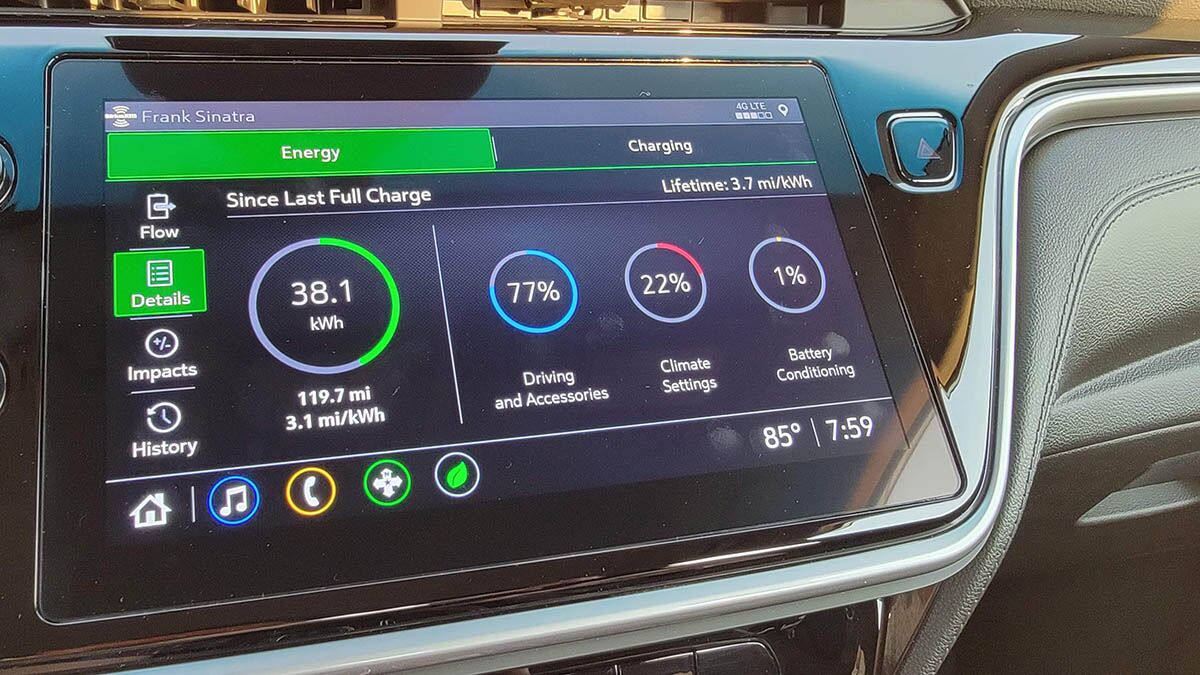
Identify Your Battery Usage
Many electric vehicles have features that show which systems are using the most battery power. You may be able to check key statistics such as battery health and average range per trip. Consult your owner’s manual or mobile app, if applicable, to learn what information is available and how to use it to maximize your range.
Visit our Car Powertrains Information Center for expert articles on electric vehicles (EVs), hybrid cars, battery technology, driving range, performance, fuel efficiency, and how different automotive powertrains work.
Editor’s Note: We have updated this article since its initial publication. Chantel Wakefield contributed to the report.