


Changing wiper blades is essential vehicle maintenance that helps keep your windshield clean and provides a clear view of the road. Wiper blade replacement is straightforward — the task requires just a few minutes and even fewer steps.
Read on to learn how to change the wiper blades for your car to ensure smooth operation and good visibility while driving.
Determine the Correct Replacement Blades
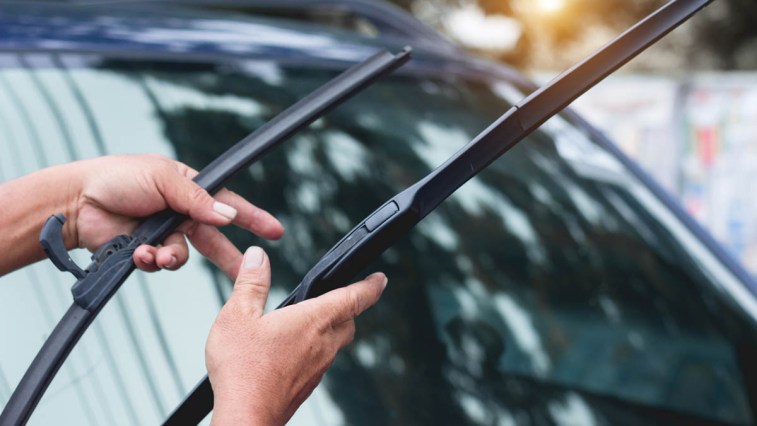
Wiper blades are not one-size-fits-all. The driver- and passenger-side blades often have different lengths, and the rear wiper may require another size and design. Check your owner’s manual or use an auto parts retailer’s vehicle lookup tool to find blades that fit your car’s wiper-arm attachment.
You’ll also need to choose among several blade types:
- Conventional blades use a metal frame with several pressure points. They are typically the least expensive, but can collect snow and ice.
- Beam blades have a frameless, curved design that applies even pressure across the windshield. They usually cost more, but often perform better in heavy rain, snow, and ice.
- Hybrid blades combine a conventional frame with an aerodynamic cover. They generally fall between conventional and beam blades in price and performance.
- Specialty blades are designed for severe weather. Winter blades resist snow and ice buildup, while silicone blades may remain flexible longer in extreme heat or cold. These blades typically cost more.
Prices range from about $8 to more than $30 per blade. Premium models may use higher-grade rubber, silicone, protective coatings, or aerodynamic designs intended to improve durability and reduce noise. However, the most expensive blade is not always necessary. Choose one that fits your vehicle, climate, driving conditions, and budget.
LEARN MORE: The history of the wiper blade and its inventor.
Types of Wiper Arms
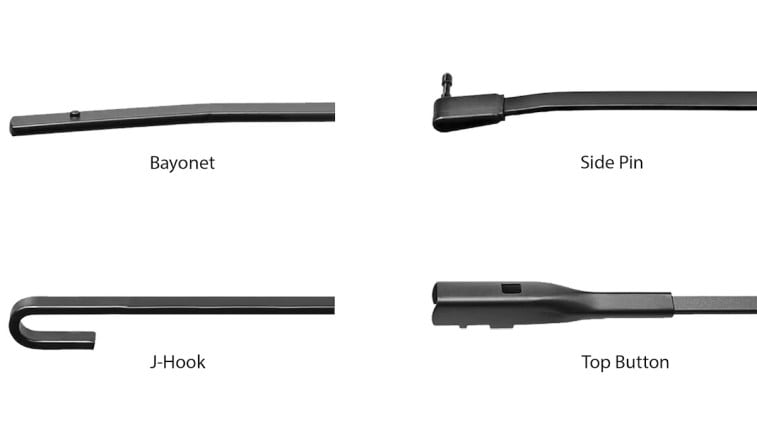
Windshield wiper arms come in various styles, depending on the vehicle model. New wiper blades include plastic adapters to accommodate different types of wiper arms. The arm types pictured above are among the more common connections.
- Bayonet — The wiper blade has a tab that slides onto the arm and locks into place.
- J-Hook — The bend at the end of the arm hooks over the U-shaped clip on the wiper blade.
- Side Pin — The pin on the arm slips through a hole on the blade and is secured with a locking mechanism.
- Top Button — A tab on the blade snaps into place when it slides onto the wiper arm.
MORE: What Are Rain-Sensing Wipers?
Remove the Old Wiper Blades
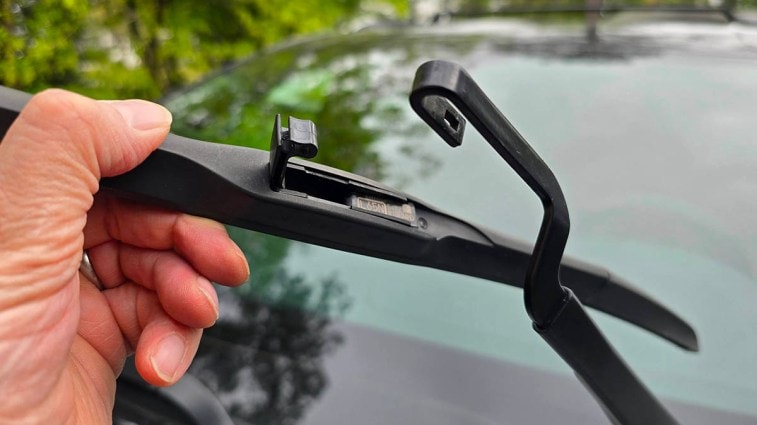
Changing wiper blades is a simple DIY fix requiring little preparation after buying compatible replacements. Have a towel handy for wiping your hands, and you may need a small flat-head screwdriver, depending on your wiper arm and blade design. The following instructions apply to wiper arms with a hook or J-hook connection type. New wiper blades typically come with adapters to be compatible with other connection types, such as those shown in the previous section.
- Step One: Use the car’s accessory mode to stop the wipers while pointing up during midswipe, if possible. Not every vehicle allows it, but having the arm in that position makes wiper blade installation easier.
- Step Two: Open the replacement blade packaging to have the new wiper blade ready to install.
- Step Three: Lift the wiper arm away from the windshield until it locks in the extended position — generally toward the sky.
- Step Four: Pivot the blade perpendicular to the arm and locate the release tab or button on the wiper blade, which can vary depending on the design.
- Step Five: Press the release tab or button and slide the wiper blade downward, away from the wiper arm. Pivoting the blade parallel to the arm might make it easier to slide down. Sometimes, you may need a small flat-head screwdriver to help release the blade.
- Step Six: Carefully remove it from the assembly once the blade is free from the wiper arm hook.
Work on replacing wiper blades one at a time. That way, if you get confused, you can refer to an installed blade.
Install New Wiper Blades
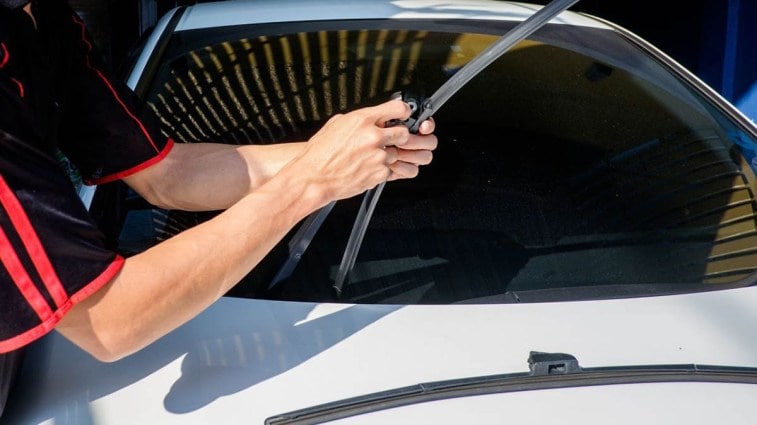
Here’s how to replace wiper blades that have worn out:
- Step One: Look at the new wiper blade and align it with the wiper arm. Ensure the wiper blade’s adapter or hook matches the wiper arm’s connection point.
- Step Two: Slide the new wiper blade upward onto the wiper arm until you hear or feel it click into place. Make sure it is securely attached.
- Step Three: Gently lower the wiper arm back onto the windshield, taking care not to let it snap back against the glass.
- Step Four: Repeat the wiper blade removal and installation procedure on the other side.
Test the New Wiper Blades
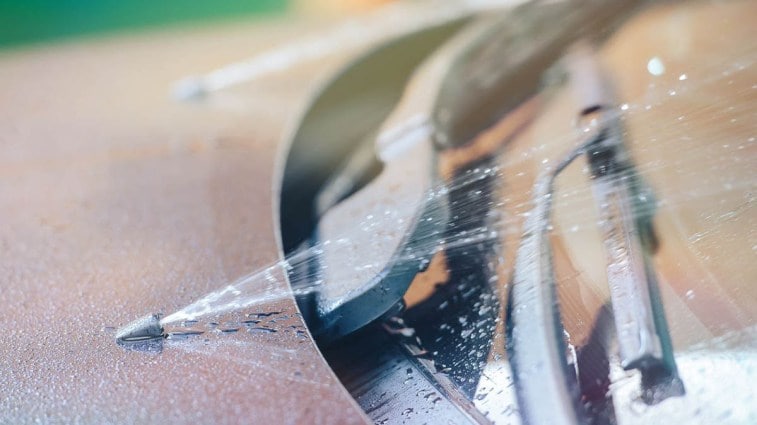
After installing new wiper blades, it’s necessary to test them to ensure they are working correctly:
- Step One: Turn on your vehicle’s ignition and activate the wiper control.
- Step Two: Spray windshield washer fluid and observe the new wiper blades moving across the windshield. Check for smooth, streak-free operation.
- Step Three: Test at different speeds to ensure the new blades stay attached and perform effectively under various conditions.
- Step Four: Listen for unusual noises or vibrations, indicating incorrect installation or defective blades.
MORE: How to Replace Your Engine Air Filter in 7 Steps
When to Change Wiper Blades
Wiper blades should be changed at least annually as part of the annual maintenance schedule. However, worn-out blades lead to poor visibility, so inspect them regularly for damage to avoid the safety hazard of having blades that don’t clear the windshield. You can see and hear clues that tell you when new blades are needed.
- Squeaking — Noisy operation when moving across glass.
- Skipping or chattering — The blades don’t move smoothly.
- Uneven — Blades miss some areas of the windshield.
- Damage — Cracks, tears, or missing pieces of the rubber blade.
- Reduced visibility — Old blades don’t effectively remove water and grime from the windshield.
If the vehicle has a rear window wiper, replace it at the same time as the wiper blades on both sides of the front windshield.
Bottom Line on Changing Wiper Blades
Much like jump-starting a car and changing a flat tire, knowing how to change windshield wiper blades is an essential skill for every driver. Regularly replacing your wiper blades is a quick and straightforward maintenance task that ensures clear visibility and safe driving in all weather conditions. By selecting the correct blade size and type for your vehicle, following the proper removal and installation steps, and testing the new blades for smooth operation, you can keep your windshield free of streaks and obstructions. Inspect your wiper blades regularly for signs of wear — such as streaking, squeaking, skipping, or visible damage — and replace them at least once a year, or sooner if needed, to maintain optimal performance and safety on the road.
Editor’s Note: We have updated this article since its initial publication.