

The National Oceanic and Atmospheric Administration‘s (NOAA) Climate Prediction Center expects a below-normal hurricane season for the Atlantic basin in 2026. NOAA is forecasting eight to 14 named storms during the season, which runs from June 1 through November 30. Of those named storms, three to six are forecast to become hurricanes, with winds of 74 mph or higher. The agency is forecasting that one to three will be “major hurricanes,” with winds of 111 mph or higher. Refer to the National Hurricane Center for real-time updates and the latest information about tropical storm and hurricane activity.
Hurricanes and tropical storms can cause extensive damage to homes, businesses, and vehicles, so it’s important to be prepared, especially if you live near the coast. While protecting your home is always a top priority, you can also safeguard your vehicle to avoid costly damage.
TIP: Download our Hurricane Season Checklist PDF to keep on hand and share with others.
Hurricane Season Car Maintenance
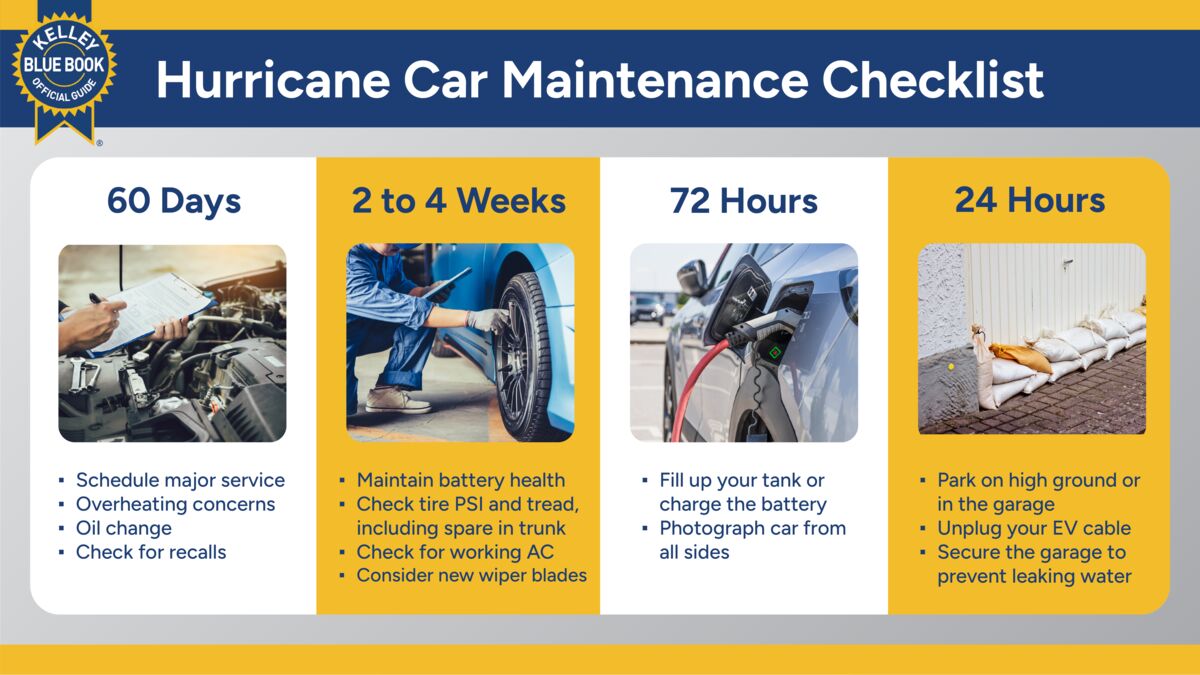
It’s essential to stay current on auto maintenance in case of an evacuation. Have a professional inspection and perform scheduled maintenance before hurricane season begins. Kelley Blue Book’s Service Advisor tool can help you review and address common problems with your vehicle if you’re not sure where to start. All you need is your vehicle identification number (VIN).
60 Days Before Season
- Schedule Major Service: Address any needed tune-up, scheduled maintenance, or lingering issues that could prevent you from following evacuation orders.
- Overheating Concerns: Engine overheating is more common when cars idle in evacuation bottlenecks. Ensure your car’s cooling system is working properly and inspected, including the radiator, fan belt, thermostat, water pump, and coolant levels. Schedule air conditioning repair or make the repair yourself, if you’re qualified.
- Oil Change: Be mindful of when your next oil change is needed. Consider getting the service early if it’s close to being due.
- Recalls: Check for vehicle recalls before hurricane season and address critical concerns and safety issues as soon as possible.
2 to 4 Weeks Before Season
- Battery: Use a multimeter to test your car’s battery. Or, take it to your local auto shop for a battery health assessment. A strong battery is essential when it’s time to pack up and go without needing a jump-start. Consider purchasing a portable jump-starting device.
- Tires: Check tire condition. Rotate or replace tires now, before a storm comes. Consider a fresh alignment to help with even wear, and check the TPMS. Your vehicle is useless for evacuation or recovery efforts if damaged tires prevent you from driving. Consider buying a battery-powered portable air compressor to ensure your tires are properly inflated. Well-inflated tires are more stable in tricky road conditions.
- Spare Tire: Resist the temptation to remove your spare tire for extra trunk storage. With unpredictable road conditions after a severe storm, you’re more likely to drive over rough debris. Having a spare tire and less storage space is better than being stranded.
- Air Conditioning System: Hurricanes bring strong winds and heavy rain, and the heat and humidity often remain after the storm passes. Ensure your car’s air conditioning system works so longer drives are comfortable.
- Wipers: Clear visibility is crucial for safe driving in heavy rain. Minimize smears, streaks, and blurry spots on your windshield with a new set of wiper blades.
72 Hours Before the Storm
- Fuel: Fill your gas tank or charge your EV. Keep it full in case you need to make an emergency evacuation.
- Pictures: For insurance purposes, photograph the vehicle from multiple sides to show its condition before the storm.
24 Hours Before the Storm
- Park: Move your vehicle to high ground or inside a garage to avoid flood damage. Place the car on lifts, if available.
- Disconnect: Unplug your EV charging cable.
- Secure: Place sandbags around the garage threshold to prevent water from leaking in.
Car Storage During the Storm
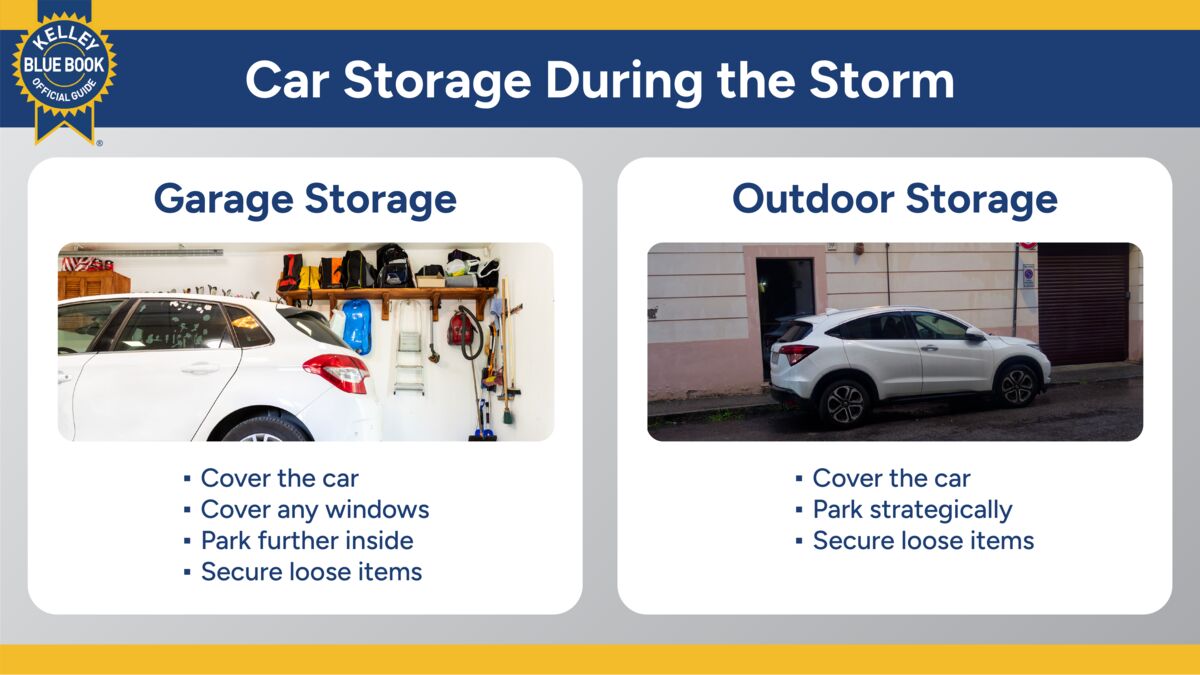
Garage Storage
If you have a garage, the best way to protect your car is to park inside and fully close the door. Once your vehicle is safely parked inside, here are some other tips:
- Cover the windows. If your garage has exterior windows or secondary doors that lead outside, board them up the same way you’d cover the windows in your home.
- Cover your car. Use a padded car cover as an exterior protection layer. Alternatively, you can place thick blankets or rugs on the vehicle to protect it from flying debris.
- Pull further inside. Put some distance between the garage door and the back of the vehicle to prevent the door from hitting the car if violent winds or debris push it inward.
- Secure loose items. Tie down or barricade loose items inside the garage so they don’t get knocked around or crash into the car during the storm.
Outdoor Storage
If you don’t have a garage or can’t park your car in a covered area, there are still ways to prepare:
- Strategic parking. Park your car on the highest ground you can find. If no elevated areas are nearby, position the car along the side of a sturdy structure to help shield the vehicle from wind and projectiles.
- Cover your car. Use a heavy-duty car cover larger than the vehicle to protect it from the elements. Put seat cushions or similar items inside the car cover to further buffer the exterior.
- Secure loose objects. Bring items like inflatables, rafts, lawn furniture, bird feeders, garden decor, and other loose objects inside your home so they won’t fly near your car when the wind kicks up.
Electric Vehicle Specific Considerations
- Charge: Ensure your battery is fully charged, just as non-EV owners need to refuel, before the rains roll in. If your area loses power, it may be a while before you can recharge again.
- Disconnect: Once your EV is fully charged, do not leave the charging cable plugged in because of the risk of a power surge or lightning strike.
Bidirectional charging is a feature available in many EV models. If a storm knocks out power and your EV has vehicle-to-load (V2L) or vehicle-to-home capability (V2H), you may be able to use your EV as a power source while crews work to restore power.
In Case of Evacuation
If you find yourself needing to evacuate the region before a hurricane, here are a few additional things you may want to keep in mind.
Car Emergency Kit Checklist for Hurricanes
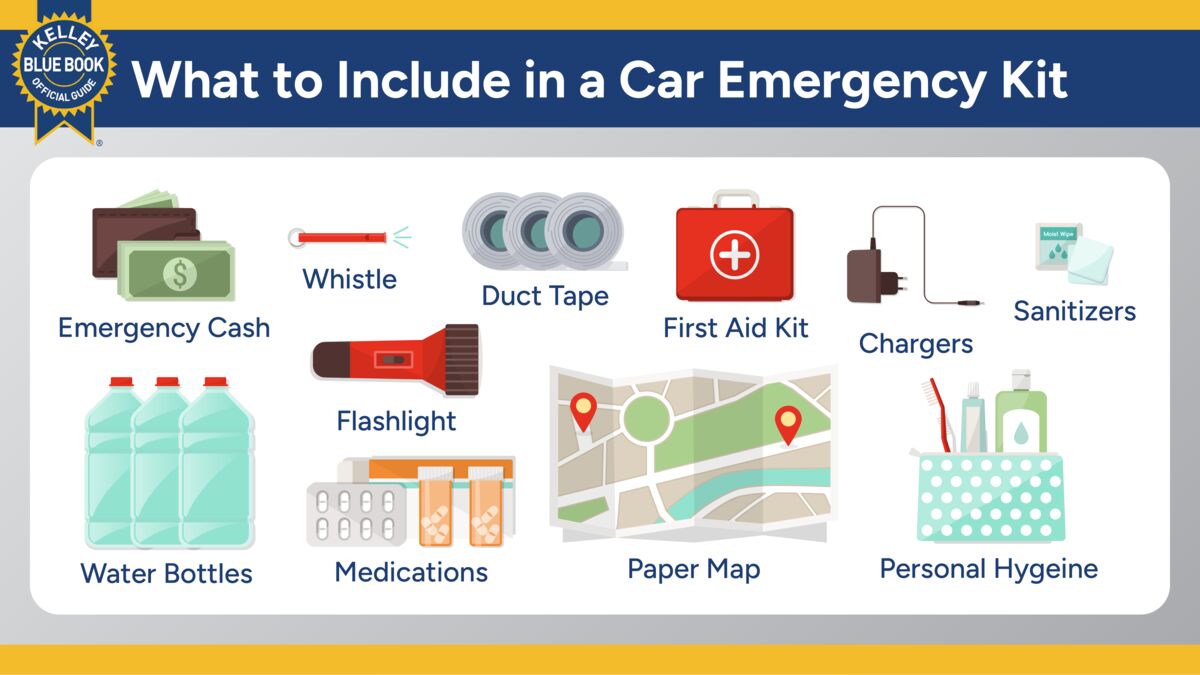
Every car owner needs a well-stocked emergency kit. Here are some items to consider when prepping for a hurricane.
Basic tool kit
Blankets
Breaker bar
Cleaning wipes
Disinfectant spray
Duct tape
Emergency cash
Fire extinguisher
First aid kit
Flashlight
Flat tire emergency repair kit
Funnel
Hand sanitizer
Heavy-duty gloves
Medications and supplements
Microfiber cloths
Non-perishable food and snacks
Paper maps
Phone charger
Portable power bank
Rain poncho
Resealable plastic bags
Skin salve
Sleeping bag
Toilet paper and personal hygiene items
Vehicle registration and insurance information
Water
Whistle
Plan Ahead and Drive Carefully
An accident will stop your progress, as well as everyone else behind you, so drive defensively and don’t panic. When driving during a hurricane evacuation, do your best to conserve fuel and use your vehicle’s resources efficiently. Here are some things you can do to get the most out of your car:
- Evacuate early. The longer you wait, the more likely you’ll be caught in traffic.
- Choose the best car. If you have multiple vehicles, evacuate using the most reliable one.
- Share the load and take breaks. If you’ve got a long drive ahead, take turns with a partner or family member. This will give you time to rest as a passenger and reach your destination sooner. If you’re driving alone, take breaks when you’re out of the danger zone. Continue your journey when you’re ready.
- Make a plan. Plan your stops ahead of time, especially if you’re an electric car driver. Note charging stations along the route and use them when possible.
- Pay attention to your fuel economy. Stay mindful of your driving range as you head to your destination.
- Use the air conditioner when you’re driving. Staying comfortable can help you remain calm during a stressful evacuation.
Editor’s Note: We have updated this article since its initial publication.